
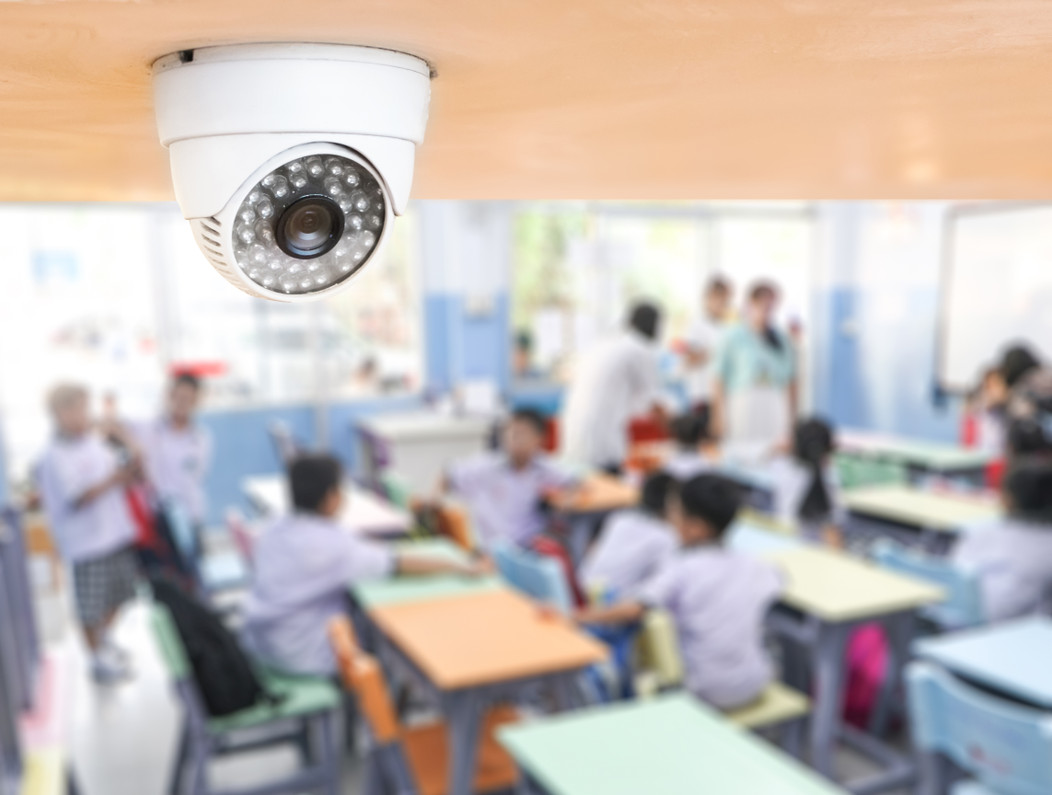
Elementary School Classroom Surveillance: Benefits, Privacy Considerations & Best Practices | Affinitech Store
Few school security decisions raise as many questions as placing cameras inside elementary classrooms. Parents want assurance that young children are safe, teachers want support without feeling constantly watched, and administrators must balance safety goals with student privacy laws. Elementary school classroom surveillance can provide real benefits, from protecting non-verbal students to resolving incidents fairly, but only when it is planned with clear purpose, strong privacy protections and transparent policies.
This guide is part of the Affinitech school security camera series. For a broader overview, start with our pillar article, Complete Guide to School Security Cameras for K-12 & Higher Education. This article focuses on one specific question: when do classroom security cameras make sense in K-5 schools, and how can schools protect privacy when they use them?
Quick Answer: Classroom surveillance in elementary schools can improve student safety, protect vulnerable and non-verbal students, support fair incident investigations and protect staff from false allegations. Because classroom video may become part of a student's education record under FERPA, schools should define a clear purpose, follow state laws, limit who can view footage, disable audio unless legally permitted and necessary, use privacy masking where appropriate, set retention rules and communicate openly with families and staff.
Considering Cameras in Elementary Classrooms?
Affinitech can help your school choose the right cameras, configure privacy protections and build a video management approach that supports both safety and student privacy.
Request a School Security AssessmentWhy Classroom Surveillance Is a Unique Decision for Elementary Schools
Cameras in entrances, hallways, parking lots and playgrounds are now common in K-5 schools. Classrooms are different. They are where instruction happens, where students spend most of their day, and where expectations of privacy and trust are highest.
Elementary schools face several conditions that make the classroom camera decision especially important:
- Young students may not be able to report what happened. Kindergarten and early elementary students, and students with communication disabilities, may struggle to describe an incident accurately.
- Students with disabilities may be especially vulnerable. Self-contained special education classrooms often serve students who rely entirely on adults for their care and safety.
- Teachers and paraprofessionals need protection too. Video can provide an objective record when allegations are made against staff.
- Privacy laws apply. Classroom video can become part of a student's education record, which affects who can view it and how it must be handled.
- Community trust matters. Parents, teachers and unions often have strong views on classroom cameras, so transparency is essential.
Classroom Surveillance and School Camera Statistics
93% of Public Schools Use Security Cameras
According to the National Center for Education Statistics (NCES), 93 percent of public schools reported using security cameras to monitor the school in the 2021–22 school year.
Elementary Schools Have Historically Trailed Older Grades
In NCES's 2015–16 School Survey on Crime and Safety, about 73 percent of public primary schools reported using one or more security cameras, compared with about 94 percent of public high schools.
Several States Now Address Cameras in Special Education Classrooms
Texas, Louisiana, West Virginia, Georgia and Alabama have adopted laws addressing cameras in special education classrooms, and lawmakers in several other states introduced similar bills in 2026, according to EdSurge.
Sources: U.S. Department of Education, National Center for Education Statistics (NCES), School Survey on Crime and Safety (SSOCS), 2015–16 and 2021–22; EdSurge, April 2026.
What Is Classroom Surveillance?
Classroom surveillance refers to the use of security cameras, and in some cases audio recording, inside instructional spaces to support student safety, staff protection and incident review.
Definition — Classroom Surveillance: The use of video cameras inside classrooms or instructional spaces, managed through a video management system, to document activity for safety, investigation and compliance purposes under a written school or district policy.
Classroom surveillance is different from general school surveillance. Hallway and entrance cameras monitor shared public areas. Classroom cameras record the daily instructional environment, so the policies governing them must be more careful and specific.
Benefits of Classroom Surveillance in Elementary Schools
Protecting Non-Verbal and Vulnerable Students
Students who are very young, non-verbal or who have significant disabilities may not be able to tell a parent or administrator what happened. Classroom video provides an objective record that can help identify mistreatment, injuries or unsafe practices. This is the main reason several states have passed laws addressing cameras in self-contained special education classrooms.
Fair, Fact-Based Incident Investigations
When a student is injured, a conflict occurs or a parent raises a concern, video helps administrators understand what actually happened instead of relying only on conflicting accounts.
Protecting Teachers and Staff
Video can protect teachers, paraprofessionals and aides from false or mistaken allegations. Many educators support cameras in specific settings for this reason.
Supporting Emergency Response
During a lockdown or emergency, classroom and hallway cameras integrated with a video management system can help administrators and first responders see which rooms are secured and where help is needed. Learn more in our guide to lockdown solutions for elementary campuses.
Documenting Behavior Plans and Restraint or Seclusion Incidents
Where state law and district policy allow, video can help document how behavior intervention plans are carried out and support required reporting of restraint or seclusion incidents.
Deterring Theft and Vandalism
Classrooms contain laptops, tablets and other technology. Cameras can help deter theft and vandalism, particularly after school hours.
Privacy Considerations for Classroom Cameras
Classroom surveillance must be planned around privacy from the beginning. The following considerations should shape every classroom camera decision.
FERPA and Classroom Video
Under the Family Educational Rights and Privacy Act (FERPA), the U.S. Department of Education explains that a video of a student is an education record when it is directly related to a student and maintained by the school or a party acting for it. For example, the Department notes that a classroom video showing a student having a seizure is directly related to that student.
| FERPA Question | What Schools Should Know |
|---|---|
| Is all classroom video an education record? | Not automatically. Video becomes an education record when it is directly related to a student and maintained by the school. |
| Can one video be the record of multiple students? | Yes. A video showing an incident involving several students can be the education record of each of them. |
| Can parents view video of their child? | Parents generally have the right to inspect and review their child's education records, which may include video. |
| What about other students in the video? | Schools may need to redact or segregate portions related to other students where reasonably possible. |
| Can video be shared with police? | It depends on how the video was created and maintained and whether a FERPA exception applies. |
Because these determinations are often context-specific, schools should involve district legal counsel when setting policies for classroom video.
State Classroom Camera Laws
Some states have specific laws about cameras in classrooms, especially special education settings. Requirements vary widely.
| State | General Approach (as reported) |
|---|---|
| Texas | Cameras in self-contained special education classrooms upon request |
| Louisiana | Cameras required in all self-contained special education classrooms |
| West Virginia | Cameras required in all self-contained special education classrooms |
| Georgia | Schools may use discretion for cameras in self-contained special education classrooms |
| Alabama | Cameras required where more than half the students have special education needs |
Classroom camera laws change frequently. Confirm your state's current requirements, including notice, retention, access and audio rules, before installing cameras.
Audio Recording
Audio recording raises additional legal and privacy concerns. Many states regulate the recording of conversations, and some require consent from participants. Many schools disable audio on classroom cameras by default and enable it only where state law specifically permits or requires it.
Where Cameras Should Never Be Placed
Cameras should never be placed in restrooms, changing areas, nurse treatment areas or other locations where students and staff have a heightened expectation of privacy, unless state law specifically directs otherwise with defined safeguards.
Covert Cameras
Hidden or covert cameras are generally inappropriate in classrooms. Visible cameras with posted notice support transparency and community trust.
Teacher and Staff Concerns
Educators may worry about cameras being used for routine performance evaluation or constant monitoring. Policies should clearly state how footage will and will not be used, and districts should involve teachers and, where applicable, bargaining units early in the process.
Where Classroom Cameras Make the Most Sense
| Space | Camera Considerations |
|---|---|
| Self-contained special education classrooms | Strongest case for cameras; follow any state-specific requirements |
| Calming, sensory or de-escalation rooms | Supports documentation and student safety; follow district policy and state law |
| General education classrooms | More debated; define a clear purpose and policy before installing |
| Computer labs and technology rooms | Common for asset protection and after-hours security |
| Classroom doorways and hallways | Lower privacy impact; often the best first step |
| Restrooms, changing areas, nurse treatment areas | Not appropriate for cameras |
Planning tip: Many elementary schools start with cameras in hallways and at classroom doorways, then add in-classroom cameras only where there is a defined need, such as self-contained special education classrooms. This approach improves safety while limiting privacy impact.
Need Help Designing a Privacy-Conscious Camera Plan?
Affinitech can help your school select cameras and configure video management features that support safety goals while protecting student privacy.
Contact an Education Security Specialist Get a QuotePrivacy-by-Design Features to Look For
Modern cameras and video management systems include features that help schools use classroom surveillance responsibly. Availability varies by manufacturer and platform.
| Feature | How It Protects Privacy |
|---|---|
| Privacy masking | Blocks out areas of the image that should not be recorded, such as windows or adjoining spaces |
| Audio disabled by default | Prevents unintended recording of conversations |
| Role-based permissions | Limits who can view live and recorded classroom video |
| Audit logs | Records who viewed or exported footage and when |
| Retention controls | Automatically deletes footage after a set period unless preserved for an incident |
| Redaction tools | Blurs other students when sharing video with a parent |
| Encrypted storage and transmission | Protects footage from unauthorized access |
| Export watermarking | Helps track exported video and discourage misuse |
Learn how video management platforms handle access and retention in What Is a School Video Management System (VMS)?
Choosing Cameras for Elementary Classrooms
| Camera Type | Classroom Use |
|---|---|
| Dome cameras | Discreet, tamper-resistant and well suited to ceiling mounting in classrooms |
| Fisheye cameras | Cover an entire classroom from one ceiling-mounted camera |
| Panoramic cameras | Wide coverage for large rooms, multipurpose spaces and libraries |
| AI cameras | Analytics for hallways and doorways; use in classrooms only under clear policy |
Leading manufacturers including Axis Communications, Hanwha Vision America and Avigilon offer cameras suitable for classroom environments. Explore all network cameras.
Storage and Retention for Classroom Video
Classroom cameras add recording hours to your system, and retention requirements may be set by state law or district policy. Plan storage carefully:
- Confirm any state-required retention period for classroom video.
- Set automatic deletion after the retention period unless footage is preserved for an incident, complaint or legal hold.
- Size recorders and storage for the required retention period.
- Decide whether footage will be stored on premises, in the cloud or both.
Use the Affinitech Recording Storage Calculator to estimate storage, then explore network video recorders, surveillance storage and cloud-based video surveillance. For a comparison of storage approaches, see Cloud vs. On-Prem VMS for Schools.
Building a Classroom Surveillance Policy
A written policy is essential before installing any classroom camera. Strong policies typically address the following:
| Policy Element | What to Define |
|---|---|
| Purpose | Why cameras are used and what they will not be used for |
| Locations | Which classrooms and spaces have cameras and why |
| Notice | Signage and written notification to families and staff |
| Audio | Whether audio is recorded and under what legal authority |
| Live viewing | Whether anyone views classrooms live, and who |
| Recorded footage access | Who may review footage and under what circumstances |
| Parent requests | How parents request to view footage and how other students are protected |
| Retention | How long footage is kept and when it is deleted |
| Law enforcement | When and how footage may be shared with police |
| Staff evaluation | Whether footage may be used in personnel matters |
| Auditing | How access logs are reviewed |
Important: Privacy and recording laws vary by state, and FERPA determinations are often context-specific. This article provides general educational information and should not be treated as legal advice. Consult district legal counsel before implementing classroom surveillance.
Step-by-Step Classroom Surveillance Implementation Guide
Step 1 — Define the Purpose
Identify the specific safety goals classroom cameras will address, such as protecting students in self-contained special education classrooms.
Step 2 — Review Federal and State Requirements
Review FERPA, state classroom camera laws, audio recording laws and records retention requirements with legal counsel.
Step 3 — Engage Stakeholders
Involve administrators, teachers, special education staff, parents and, where applicable, bargaining units.
Step 4 — Write the Policy
Document purpose, locations, access, retention, audio and parent request procedures.
Step 5 — Select Cameras and Platform
Choose cameras and a VMS with privacy masking, role-based access, audit logs and retention controls.
Step 6 — Plan Placement
Position cameras to cover the instructional space without capturing restrooms, changing areas or areas outside the room.
Step 7 — Configure Privacy Settings
Disable audio unless required, apply privacy masks, set user permissions and configure retention.
Step 8 — Notify Families and Staff
Post signage and send written notice before cameras go live.
Step 9 — Train Authorized Users
Train administrators on access rules, FERPA requirements and how to handle parent requests.
Step 10 — Audit and Review
Review access logs, policy compliance and community feedback regularly.
Classroom Surveillance Checklist for Elementary Schools
- ☐ Clear, documented purpose for classroom cameras
- ☐ FERPA and state law review completed with legal counsel
- ☐ State special education camera requirements confirmed
- ☐ Audio recording rules confirmed
- ☐ Teachers, staff and families consulted
- ☐ Written classroom surveillance policy adopted
- ☐ Cameras placed to avoid restrooms and private areas
- ☐ Privacy masking applied where needed
- ☐ Role-based access and audit logs enabled
- ☐ Retention period configured
- ☐ Parent video request procedure defined
- ☐ Signage and written notice provided
- ☐ Authorized users trained
Common Classroom Surveillance Mistakes
| Mistake | Better Approach |
|---|---|
| Installing cameras before writing a policy | Adopt a written policy first |
| Leaving audio enabled by default | Disable audio unless legally permitted and necessary |
| Giving broad access to classroom footage | Limit access to authorized roles and log every view |
| Not telling families or staff | Provide signage and written notice |
| Keeping footage indefinitely | Set retention periods and automatic deletion |
| Ignoring other students when sharing video | Redact or segregate footage where reasonably possible |
| Using covert cameras | Use visible cameras with posted notice |
Recommended Product Categories for Classroom Surveillance
Dome Cameras
Discreet, tamper-resistant cameras for classroom ceilings.
Fisheye Cameras
Full-room coverage from a single camera.
Video Management Systems
Privacy masking, role-based access, audit logs and retention controls.
Network Video Recorders and Storage
Local recording sized for required retention periods.
Cloud-Based Video Surveillance
Centralized management with secure remote access.
Explore Cloud-Based Video Surveillance Solutions
Quick Answers: Elementary Classroom Surveillance
Should elementary schools have cameras in classrooms?
Cameras in elementary classrooms can be appropriate when there is a defined safety purpose, such as protecting students in self-contained special education classrooms, and when strong privacy policies are in place.
Is classroom video covered by FERPA?
Classroom video is an education record under FERPA when it is directly related to a student and maintained by the school. Whether a specific video is directly related to a student is often context-specific.
Can parents watch classroom video?
Parents generally have the right to inspect and review video that is part of their child's education record, subject to protections for other students in the video.
Frequently Asked Questions About Elementary Classroom Surveillance
1. Are classroom cameras legal in elementary schools?
Classroom cameras are generally permitted, but schools must follow FERPA, state camera and recording laws, and district policy. Some states have specific rules for special education classrooms.
2. Which states require cameras in special education classrooms?
As reported in 2026, Louisiana and West Virginia require cameras in self-contained special education classrooms, Texas requires them upon request, Alabama requires them in certain classrooms, and Georgia allows them at district discretion. Laws change frequently, so confirm current requirements.
3. Should classroom cameras record audio?
Many schools disable audio by default because recording conversations is regulated in many states. Enable audio only where state law permits or requires it.
4. Who should be allowed to view classroom footage?
Access should be limited to authorized roles defined in policy, such as designated administrators, with every view and export logged.
5. Can classroom video be used to evaluate teachers?
That depends on district policy, state law and any collective bargaining agreements. Policies should state clearly whether footage may be used in personnel matters.
6. How long should classroom video be kept?
Retention periods are often set by state law or district policy. Footage tied to an incident, complaint or legal hold should be preserved longer.
7. Can a parent get a copy of classroom video?
FERPA provides a right to inspect and review education records. Whether copies are provided depends on policy and circumstances, and other students may need to be redacted.
8. What is privacy masking?
Privacy masking blocks selected areas of a camera's view so they are not shown or recorded.
9. Are hidden cameras allowed in classrooms?
Covert cameras are generally inappropriate in classrooms. Visible cameras with posted notice support transparency and trust.
10. Where should cameras never be placed?
Cameras should not be placed in restrooms, changing areas or nurse treatment areas unless state law specifically requires otherwise with defined safeguards.
11. Do teachers support classroom cameras?
Views vary. Some educators welcome cameras for protection against false allegations, while others worry about constant monitoring. Involving teachers early helps build support.
12. How can Affinitech help with classroom surveillance?
Affinitech can help select classroom cameras, configure privacy features in your video management system, size storage for retention requirements and provide professional installation and configuration.
Classroom Surveillance Definitions
| Term | Definition |
|---|---|
| FERPA | The Family Educational Rights and Privacy Act, a federal law protecting the privacy of student education records. |
| Education Record | A record directly related to a student and maintained by a school or a party acting for it. |
| Self-Contained Classroom | A classroom dedicated to students receiving special education services. |
| Privacy Masking | A camera or VMS feature that blocks selected areas of an image. |
| Redaction | Blurring or removing portions of video, such as other students, before sharing. |
| Audit Log | A record of who accessed, viewed or exported video and when. |
| Retention Period | The length of time footage is kept before deletion. |
Elementary Classroom Surveillance: Key Takeaways
- Classroom cameras can protect vulnerable students, support fair investigations and protect staff.
- Classroom video can become a student's education record under FERPA.
- Several states have specific laws for cameras in special education classrooms.
- Audio should be disabled unless state law permits or requires it.
- A written policy should be adopted before any classroom camera is installed.
- Privacy masking, role-based access, audit logs and retention controls are essential.
- Transparency with families and staff builds trust and support.
Related School Security Resources
- Complete Guide to School Security Cameras for K-12 & Higher Education
- Best Security Cameras for Elementary Schools
- How AI Cameras Help Protect Younger Students
- Best Lockdown Solutions for Elementary Campuses
- What Is a School Video Management System (VMS)?
- Cloud vs. On-Prem VMS for Schools
Sources
U.S. Department of Education, Student Privacy Policy Office, FAQs on Photos and Videos under FERPA.
U.S. Department of Education, National Center for Education Statistics (NCES), School Survey on Crime and Safety (SSOCS), 2015–16 and 2021–22.
EdSurge, reporting on state special education classroom camera legislation, April 2026.
Louisiana Illuminator and Verite News, reporting on Louisiana Act 479, January 2026.
Protect Students and Privacy in Your Elementary Classrooms
From camera selection to privacy masking, access controls and retention settings, Affinitech can help your school implement classroom surveillance responsibly.
Request a School Security Assessment Contact an Education Security Specialist
Recent Posts
-
Elementary School Classroom Surveillance: Benefits, Privacy Considerations & Best Practices | Affinitech Store
Few school security decisions raise as many questions as placing cameras inside elementary classroo … -
Best Lockdown Solutions for Elementary Campuses: Complete K-5 School Lockdown Guide | Affinitech Store
When an emergency happens at an elementary school, the first minutes matter most. Young students dep … -
Hybrid VMS for School Districts: Complete Guide to Cloud & On-Prem Video Management | Affinitech Store
School districts rarely get to design a surveillance system from a blank page. Most are managing a m … -
Best Security Cameras for Middle Schools | School Security Camera Guide
Best Security Cameras for Middle Schools: Complete Middle School Security Camera Guide Choosing the …