
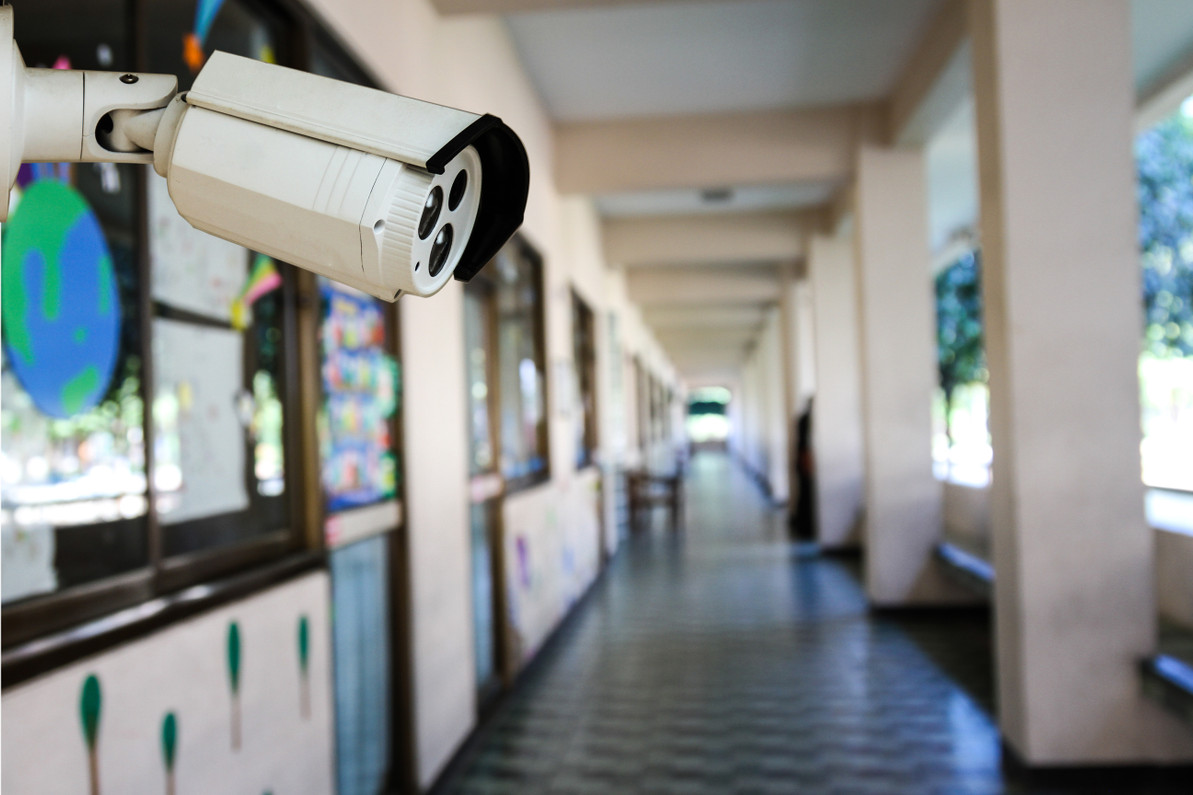
How AI Cameras Help Protect Younger Students | Elementary School Security Guide | Affinitech Store
How AI Cameras Help Protect Younger Students
Discover how artificial intelligence is transforming elementary school security through proactive monitoring, intelligent video analytics, faster emergency response, and safer learning environments.
Quick Answer
AI security cameras help protect younger students by automatically identifying potential safety concerns such as unauthorized visitors, perimeter breaches, loitering, unattended objects, and unusual activity. Unlike traditional surveillance cameras that simply record events, AI-enabled cameras continuously analyze video in real time, helping school administrators and security personnel respond more quickly while reducing false alarms.
Why Elementary Schools Require Specialized Security
Elementary schools present unique security challenges compared to middle schools, high schools, or universities. Younger children require greater supervision, have limited awareness of potential threats, and depend heavily on teachers and staff to maintain a safe environment. School security technology should therefore focus on prevention, rapid awareness, and efficient response rather than simply recording incidents after they occur.
Modern AI security cameras combine high-resolution imaging with advanced analytics capable of detecting people, vehicles, unusual movement, perimeter intrusions, crowd formation, and other activities that may require attention. These capabilities allow schools to enhance campus safety while improving operational efficiency for administrators and security teams.
Definition: What Is an AI Security Camera?
An AI security camera is an IP surveillance camera equipped with artificial intelligence algorithms that automatically analyze video footage in real time. Rather than relying solely on motion detection, AI cameras distinguish between people, vehicles, animals, and environmental movement while identifying specific behaviors or events that warrant attention.
Common AI Capabilities
- Person Detection
- Vehicle Detection
- Facial Recognition (where permitted)
- License Plate Recognition
- Loitering Detection
- Object Left Behind Detection
- Intrusion Detection
- Line Crossing Detection
- Crowd Density Monitoring
- Behavior Analysis
School Security Statistics
- More than 90% of U.S. public schools use security cameras as part of their overall physical security strategy.1
- Access control and surveillance technologies continue to be among the most widely adopted security investments across K–12 education.2
- The Cybersecurity and Infrastructure Security Agency (CISA) recommends layered physical security that includes surveillance, visitor management, access control, and emergency planning.3
- SchoolSafety.gov recommends integrating security technology with emergency operations planning rather than relying on any single solution.4
Sources:
1. National Center for Education Statistics (NCES)
2. Campus Safety Magazine
3. Cybersecurity and Infrastructure Security Agency (CISA)
4. SchoolSafety.gov
How AI Cameras Differ from Traditional Security Cameras
| Traditional Camera | AI Camera |
|---|---|
| Records video | Analyzes video in real time |
| Motion detection only | Person, vehicle, and object classification |
| Requires constant monitoring | Automatically alerts administrators |
| Large number of false alarms | Reduced nuisance alerts using AI filtering |
| Limited search capabilities | Fast forensic searches using AI metadata |
Protect Your Students with Intelligent School Security
AI-powered surveillance helps schools identify potential threats earlier, improve situational awareness, and support safer learning environments for younger students.
Request a School Security AssessmentWhat You'll Learn in This Guide
- How AI analytics improve school safety
- Protecting school entrances with AI cameras
- Playground and recess monitoring
- Hallway and classroom surveillance best practices
- Bus loading zone security
- FERPA and student privacy considerations
- NDAA compliance for K–12 schools
- Cloud versus on-premises video management
- Choosing the right AI camera features
- Step-by-step buying guide for elementary schools
Where AI Cameras Help Protect Younger Students
Unlike traditional surveillance systems that primarily record events for later review, AI-powered security cameras actively monitor school environments in real time. Intelligent video analytics help administrators identify potential safety concerns before they escalate, allowing staff to respond more quickly while reducing unnecessary false alarms.
For elementary schools, AI cameras provide the greatest value in areas where younger students gather, transition between activities, or interact with visitors. When integrated with a School Video Management System (VMS), access control, and emergency notification systems, AI cameras become an important part of a comprehensive campus safety strategy.
1. Protecting School Entrances
School entrances remain one of the most critical locations for video surveillance. AI-enabled cameras can automatically detect unauthorized visitors, identify loitering behavior, and alert staff when individuals enter restricted areas. Combined with visitor management systems and access control, entrance surveillance provides administrators with greater visibility into who is entering school property.
Recommended AI Features
- Person Detection
- Facial Matching (where permitted)
- Loitering Detection
- Perimeter Intrusion Detection
- Virtual Tripwire Alerts
- Visitor Activity Monitoring
2. Hallway Monitoring
Hallways experience continuous student movement throughout the school day. AI analytics can help administrators monitor congestion, identify unusual behavior, and quickly locate individuals following an incident. Intelligent search capabilities reduce investigation time by allowing security staff to search based on people, clothing color, movement direction, or specific events instead of manually reviewing hours of recorded footage.
| Traditional Surveillance | AI Analytics |
|---|---|
| Manual video review | Intelligent forensic search |
| Motion alerts only | Person classification |
| High false alarm rate | AI filtering reduces nuisance alerts |
| Reactive investigations | Proactive monitoring |
3. Classroom Corridor Visibility
While classroom interiors require careful consideration of district policies and privacy expectations, many schools choose to monitor classroom entrances and surrounding corridors. AI cameras positioned outside classrooms help administrators identify emergencies, unauthorized access, or unusual activity without continuously monitoring instructional spaces.
Best Practices
- Monitor classroom entrances rather than instructional areas when appropriate.
- Follow district privacy policies.
- Restrict video access using role-based permissions.
- Clearly communicate surveillance policies to staff and families.
4. Playground Surveillance
Playgrounds are among the most dynamic environments on an elementary school campus. AI cameras help monitor large outdoor areas by detecting perimeter intrusions after school hours, identifying individuals entering restricted zones, and assisting staff during emergencies.
Wide dynamic range imaging, vandal-resistant housings, and AI-powered object detection make modern outdoor cameras well suited for playgrounds, recreational spaces, and athletic facilities.
5. Bus Loading and Parent Pickup Areas
Arrival and dismissal are among the busiest times of the school day. AI analytics can help monitor pedestrian movement, vehicle activity, congestion, and unauthorized access while providing administrators with better visibility during these high-traffic periods.
| Area | Recommended Analytics |
|---|---|
| Bus Loading Zone | Person Detection, Crowd Monitoring |
| Parent Pickup | Vehicle Detection, Queue Monitoring |
| Parking Lots | License Plate Recognition (where appropriate), Intrusion Detection |
| School Perimeter | Virtual Fence, Line Crossing, Loitering Detection |
Top AI Features for Elementary Schools
| AI Feature | Benefit for Schools |
|---|---|
| Person Detection | Improves alert accuracy while reducing false alarms. |
| Intrusion Detection | Detects unauthorized access after hours. |
| Object Left Behind | Identifies unattended packages or belongings. |
| Loitering Detection | Recognizes prolonged presence near entrances or restricted areas. |
| Crowd Detection | Helps monitor student gatherings during arrival, dismissal, and events. |
| Intelligent Search | Reduces investigation time by locating events quickly. |
Recommended Solutions for Elementary Schools
AI Dome Cameras
Ideal for hallways, entrances, cafeterias, and administrative areas requiring intelligent people detection and high-quality video.
AI Bullet Cameras
Recommended for playgrounds, parking lots, bus loading zones, and building perimeters where long-range coverage is needed.
Multi-Sensor Cameras
Provide wide-area coverage of large common spaces while reducing the total number of cameras required.
Enterprise School VMS
Centralized video management software supporting AI analytics, investigations, mobile viewing, and integration with access control systems.
Build a Safer Learning Environment with AI Security Cameras
Affinitech Store helps K–12 schools deploy intelligent surveillance systems that combine AI-powered cameras, enterprise video management, and integrated access control to improve campus safety while supporting privacy and compliance goals.
Continue Learning
To build a comprehensive school security strategy, explore these additional Affinitech Store resources:
- Complete Guide to School Security Cameras
- School Access Control Systems Guide
- School Video Management Systems (VMS) Guide
- School Parking Lot Surveillance
- Visitor Management Systems for Schools
FERPA & Student Privacy Considerations
Deploying AI security cameras in elementary schools requires balancing enhanced security with student privacy. Schools should establish clear policies governing camera placement, access to recorded footage, retention periods, and acceptable use. Surveillance systems should support safety objectives while respecting student rights and complying with applicable federal, state, and local regulations.
FERPA Best Practices
- Create written surveillance policies approved by district leadership.
- Limit access to recorded video using role-based permissions.
- Establish documented video retention schedules.
- Post signage informing visitors that surveillance is in use.
- Review camera locations regularly to ensure they support legitimate safety objectives.
- Provide annual staff training on privacy and acceptable use.
Note: FERPA generally protects education records. Whether recorded video is considered an education record depends on how it is maintained and used. Schools should consult district legal counsel when developing surveillance policies.
Understanding NDAA Compliance
Many K–12 districts and higher education institutions receive federal funding or follow procurement standards requiring NDAA-compliant surveillance equipment. The National Defense Authorization Act (NDAA) restricts the use of certain manufacturers in federally funded projects, making compliance an important consideration when selecting cameras, recorders, and video management systems.
| Why NDAA Matters | Benefit |
|---|---|
| Federal Procurement | Supports purchasing compliance. |
| Cybersecurity | Reduces supply chain concerns. |
| Long-Term Planning | Protects future infrastructure investments. |
| Grant Eligibility | Supports many government-funded projects. |
Cybersecurity Best Practices for AI Cameras
Modern AI cameras are network-connected devices that should be managed with the same cybersecurity discipline as any other critical IT asset. Proper configuration helps reduce unauthorized access, ransomware risks, and service disruptions while protecting sensitive school infrastructure.
Network Security
- Separate surveillance VLANs
- Firewalls
- Secure VPN access
- Zero Trust principles
Device Security
- Strong passwords
- Multi-factor authentication
- Firmware updates
- Disable unused services
Operational Security
- Audit logs
- Role-based permissions
- Encrypted communications
- Regular security assessments
Reference: Cybersecurity and Infrastructure Security Agency (CISA) recommends layered cybersecurity practices for physical security systems and network-connected devices.
Cloud vs. On-Premises AI Video Surveillance
Selecting the right deployment model depends on available IT resources, district policies, cybersecurity requirements, and long-term operational goals. Both cloud and on-premises platforms can provide enterprise-grade performance when properly designed.
| Feature | Cloud VMS | On-Premises VMS |
|---|---|---|
| Initial Cost | Lower | Higher |
| Remote Access | Excellent | Good |
| Scalability | Excellent | Good |
| Maintenance | Vendor Managed | District IT |
| Best Fit | Growing districts & multi-campus schools | Large campuses with dedicated IT teams |
Budget Planning for Elementary Schools
Successful school security projects focus on lifecycle value rather than initial purchase price alone. Budget planning should include hardware, software licensing, installation, network infrastructure, cybersecurity, training, ongoing maintenance, and future expansion.
| Budget Category | Planning Consideration |
|---|---|
| AI Cameras | Coverage, image quality, AI capabilities |
| Storage | Retention period and recording resolution |
| Networking | PoE switches, bandwidth, redundancy |
| VMS Software | Licensing and future scalability |
| Training & Support | Administrator training and annual maintenance |
Step-by-Step Implementation Guide
- Perform a campus security assessment. Identify vulnerabilities, entrances, high-traffic areas, playgrounds, parking lots, and emergency assembly locations.
- Define project objectives. Determine whether the focus is deterrence, incident response, visitor management, or operational efficiency.
- Select NDAA-compliant AI cameras. Choose camera models based on coverage requirements, lighting conditions, and analytics capabilities.
- Design the network. Ensure sufficient PoE capacity, bandwidth, segmentation, and redundancy.
- Select an enterprise VMS. Evaluate cloud, on-premises, or hybrid deployment models.
- Develop privacy policies. Document video retention, user permissions, and data governance procedures.
- Integrate complementary technologies. Connect cameras with access control, visitor management, emergency notification, and lockdown systems where appropriate.
- Train staff. Provide administrators and security personnel with hands-on training and incident response procedures.
- Perform routine maintenance. Schedule firmware updates, cybersecurity reviews, and annual system testing.
- Review and optimize. Use analytics, incident reports, and operational feedback to improve system performance over time.
Pros & Cons of AI Security Cameras for Elementary Schools
Advantages
- Proactive threat detection
- Reduced false alarms
- Improved emergency response
- Faster forensic investigations
- Enhanced situational awareness
- Scalable across multiple campuses
- Supports integration with VMS and access control
- Improves operational efficiency
Considerations
- Requires clear privacy policies
- Higher upfront investment than basic cameras
- Requires ongoing cybersecurity management
- Staff training is essential
- Storage requirements increase with higher resolutions
- AI features should complement—not replace—human decision-making
AI Overview: How Do AI Cameras Improve Elementary School Safety?
AI security cameras improve elementary school safety by using intelligent video analytics to identify people, vehicles, unusual behavior, unauthorized access, and potential security concerns in real time. Unlike traditional surveillance cameras that simply record video, AI-enabled systems proactively notify school personnel, helping administrators respond faster while reducing false alarms. When integrated with access control, visitor management, emergency notification, and Video Management Systems (VMS), AI cameras become part of a comprehensive school security strategy.
Key Takeaways
Proactive Protection
AI cameras identify potential threats before they become emergencies, allowing school staff to intervene more quickly.
Smarter Investigations
Intelligent search dramatically reduces investigation time by locating people, vehicles, or events using AI metadata.
Integrated Security
AI surveillance works best when combined with school access control, visitor management, emergency notification, and enterprise VMS platforms.
Request a School Security Assessment
Every school has unique security challenges. Affinitech Store works with K–12 districts, private schools, charter schools, and higher education institutions to design scalable security solutions that align with your operational goals, budget, and compliance requirements.
Schedule Your Security AssessmentSchool Security Consultation Request
Tell us about your school, and one of our education security specialists will recommend a customized solution based on your campus layout, security priorities, and technology requirements.
Recommended School Security Technologies
AI Security Cameras
Commercial-grade AI-enabled dome, bullet, panoramic, and multi-sensor cameras designed for K–12 schools and higher education.
Explore AI Camera Solutions →School Access Control
Protect entrances with credential readers, smart controllers, mobile credentials, visitor management, and lockdown integration.
View Access Control Solutions →Video Management Systems
Centralize video recording, AI analytics, forensic search, mobile viewing, and enterprise security management.
Explore School VMS →Continue Building Your School Security Strategy
Explore additional resources from the Affinitech Store Education Security Knowledge Center.
- Complete Guide to School Security Cameras
- School Access Control Systems Guide
- Video Management Systems (VMS) for Schools
- Visitor Management Systems
- Emergency Notification Systems
- School Lockdown Systems
- Mobile Credentials for Schools
- Cloud Security Solutions
Frequently Asked Questions About AI Cameras for Elementary Schools
The following questions address many of the concerns school administrators, IT professionals, facility directors, and security personnel have when evaluating AI-powered surveillance systems for K–5 campuses.
1. What are AI security cameras for schools?
AI security cameras use onboard artificial intelligence to recognize people, vehicles, movement patterns, and specific events. Unlike traditional cameras that simply record video, AI cameras generate intelligent alerts that help staff respond faster to potential security concerns.
2. Are AI cameras appropriate for elementary schools?
Yes. When implemented with appropriate privacy policies and administrative oversight, AI cameras can improve campus awareness, monitor entrances, playgrounds, hallways, and parking areas, and support faster emergency response without replacing school staff.
3. How do AI cameras reduce false alarms?
Modern analytics distinguish between people, vehicles, animals, weather, and other environmental movement. This reduces nuisance alerts compared to traditional motion detection and allows security staff to focus on meaningful events.
4. Should classrooms have security cameras?
Many schools choose to monitor classroom entrances, hallways, and common areas rather than instructional spaces. Camera placement should always align with district policies, privacy expectations, and applicable regulations.
5. What are the best locations for AI cameras?
Typical locations include main entrances, vestibules, administrative offices, hallways, cafeterias, playgrounds, gymnasiums, bus loading zones, parking lots, athletic fields, and building perimeters.
6. What is an NDAA-compliant security camera?
An NDAA-compliant camera meets U.S. federal procurement requirements established by the National Defense Authorization Act. Many public schools and federally funded projects require compliant surveillance equipment.
7. How long should schools retain surveillance video?
Retention periods vary based on district policy, state regulations, storage capacity, and operational requirements. Many schools retain video for several weeks while extending retention for investigations or legal matters.
8. Are cloud-based surveillance systems secure?
Enterprise cloud video platforms can provide strong security when combined with encryption, multi-factor authentication, role-based permissions, regular software updates, and vendor security best practices.
9. What AI features are most valuable for elementary schools?
Popular analytics include person detection, intrusion detection, loitering detection, object left behind alerts, crowd monitoring, intelligent search, and virtual perimeter protection.
10. Can AI cameras integrate with access control systems?
Yes. AI cameras often integrate with electronic access control, visitor management, emergency notification, school lockdown systems, and enterprise Video Management Systems (VMS) to provide a unified security platform.
11. How many cameras does an elementary school typically need?
The number depends on campus size, building layout, entrances, playgrounds, parking lots, and security objectives. A professional site assessment helps determine the appropriate quantity and placement.
12. What is the difference between AI cameras and traditional surveillance cameras?
Traditional cameras primarily record footage for later review, while AI cameras analyze video in real time, classify objects, generate intelligent alerts, and dramatically reduce investigation time through advanced search capabilities.
13. Can AI cameras help during emergency situations?
Yes. AI analytics can quickly identify unusual activity, assist first responders with situational awareness, and provide administrators with valuable information during emergencies when integrated with other life safety systems.
14. Are AI cameras difficult to manage?
Most enterprise systems include centralized dashboards, automated health monitoring, remote firmware management, user permissions, and intuitive search tools that simplify administration.
15. How can Affinitech Store help schools select the right AI cameras?
Affinitech Store works with K–12 schools, school districts, and higher education institutions to design customized surveillance solutions that include AI cameras, access control, video management systems, cloud platforms, and supporting infrastructure tailored to each campus.
Featured Snippet Summary
AI security cameras help protect elementary schools by providing intelligent real-time monitoring, reducing false alarms, improving emergency response, and integrating with access control and Video Management Systems (VMS). When combined with strong cybersecurity practices, FERPA-conscious policies, and NDAA-compliant equipment, AI surveillance supports a safer learning environment while improving operational efficiency.
Ready to Modernize Your School Security?
Whether you're upgrading an existing surveillance system or designing a new campus-wide security solution, Affinitech Store provides AI-powered cameras, enterprise Video Management Systems, access control, visitor management, emergency notification, and cybersecurity-focused solutions for K–12 schools and universities.
Request a School Security Assessment Contact an Education Security SpecialistRelated School Security Resources
- Complete Guide to School Security Cameras
- School Access Control Systems Guide
- Video Management Systems (VMS) for Schools
- What Is a School Video Management System?
- School Parking Lot Surveillance Best Practices
- Visitor Management Systems for Schools
- Emergency Notification Systems
- Mobile Credentials for School Access Control
Recent Posts
-
Best Security Cameras for Middle Schools | School Security Camera Guide
Best Security Cameras for Middle Schools: Complete Middle School Security Camera Guide Choosing the … -
Access Control & Visitor Management Systems for Elementary Schools | Affinitech
Access Control & Visitor Management Systems for Elementary Schools Elementary schools need security … -
Cloud vs. On-Prem VMS for Schools: Complete Guide | Affinitech
Cloud vs On-Prem VMS for Schools: Complete Guide to School Video Management Systems Should … -
School Door Access Systems: Complete Guide to Secure School Entrances | Affinitech Store
School Door Access Systems: Complete Guide to Secure School Entrances Modern school door access …