
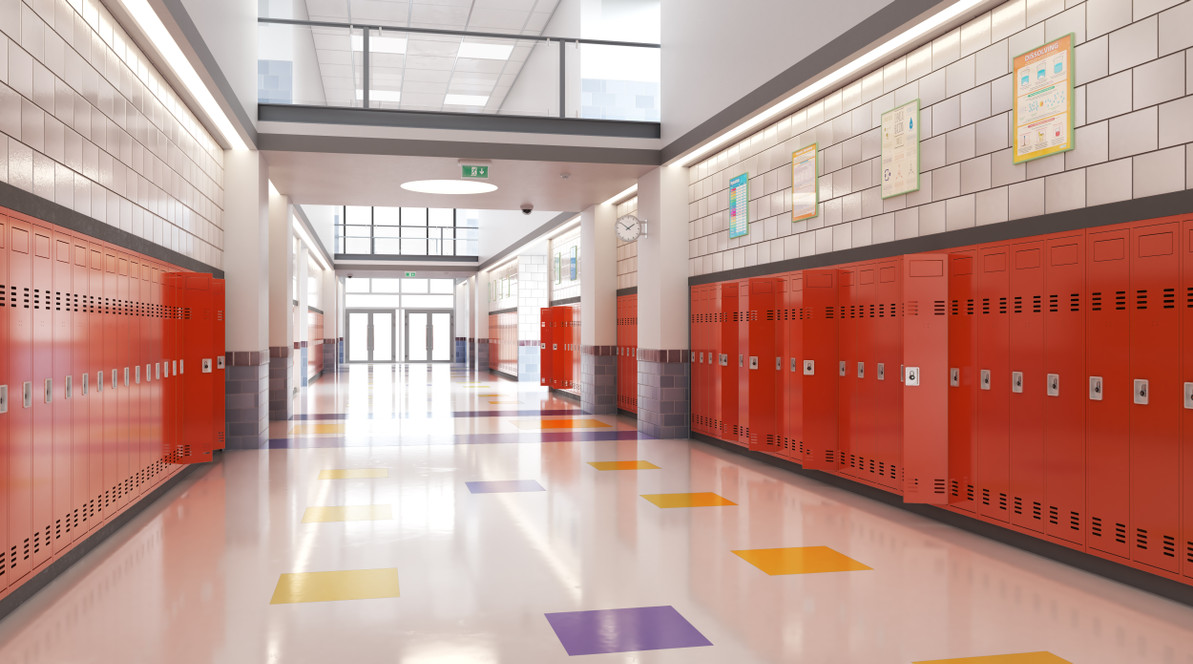
Best Security Cameras for Middle Schools | School Security Camera Guide
Best Security Cameras for Middle Schools: Complete Middle School Security Camera Guide
Choosing the best security cameras for middle schools requires more than selecting cameras with the highest resolution. Middle schools have unique security challenges involving student movement, multiple entrances, crowded hallways, athletic facilities, parking areas, visitor traffic, after-school activities, and larger campuses.
A modern middle school security camera system should provide reliable video coverage, intelligent analytics, strong low-light performance, vandal-resistant hardware, cybersecurity protections, and integration with access control and video management systems (VMS).
Need Help Designing a Middle School Security Camera System?
Affinitech Store can help evaluate camera placement, coverage requirements, VMS options, network infrastructure, storage, AI analytics, and future expansion.
Request a School Security AssessmentWhat Are the Best Security Cameras for Middle Schools?
The best security cameras for middle schools are commercial-grade IP cameras selected according to the location, lighting, coverage area, security objective, and required level of identification. Most middle schools benefit from a combination of AI-enabled dome cameras for hallways and entrances, vandal-resistant cameras for high-traffic areas, outdoor cameras for parking lots and athletic areas, panoramic or multi-sensor cameras for large spaces, and PTZ cameras for wide-area campus monitoring.
The cameras should connect to an enterprise Video Management System (VMS) that provides centralized recording, user permissions, investigation tools, remote viewing, analytics, and integration with other school security technologies.
Why Middle Schools Need Specialized Security Cameras
Middle schools occupy an important position between elementary and high school environments. Students are generally more independent than younger children, but campuses can experience substantial movement throughout the school day. Students transition between classrooms, cafeterias, gymnasiums, athletic facilities, buses, and outdoor areas while staff manage multiple entrances, visitors, deliveries, and after-school activities.
This makes visibility particularly important. A middle school surveillance system should help administrators and authorized security personnel understand what is happening across the campus while also providing recorded evidence when an incident requires investigation.
Middle School Security Challenges
Middle School Security Camera Statistics
Security cameras are already widely deployed in middle-school environments. According to the National Center for Education Statistics, 96% of public middle schools reported using security cameras to monitor the school during the 2021–22 school year.
NCES also reported that 97% of public middle schools controlled access to school buildings during school hours. These figures illustrate why video surveillance and access control should be considered complementary technologies rather than separate security investments.
The objective should not simply be to install more cameras. Schools should design a system around specific coverage objectives, appropriate camera placement, reliable recording, cybersecurity, privacy policies, and a defined response process.
Want to know more?
This article is part of Affinitech Store's comprehensive school security security series. For a broader system-design overview, see the Complete Guide to School Security Cameras.
Where Should Security Cameras Be Installed in Middle Schools?
Camera placement is one of the most important decisions in a middle school surveillance project. Schools should begin with a security assessment and identify areas where video visibility provides the greatest safety, operational, or investigative value.
1. Main School Entrances
Main entrances should receive high-priority camera coverage because they are often the primary controlled access point for students, staff, visitors, and deliveries. Cameras should provide clear views of approaching individuals and the surrounding entrance area.
Look for cameras with high dynamic range, strong low-light performance, sufficient resolution for the intended identification distance, and compatibility with the school's access control and VMS platforms.
2. Secondary Entrances and Staff Entrances
Secondary doors can create security gaps if they are not monitored. Cameras should provide visibility around staff entrances, athletic entrances, loading areas, and other doors that may be used during school operations or after-hours activities.
3. Hallways and Student Common Areas
Hallways are among the highest-value locations for middle school surveillance. Students may move through corridors in large groups between classes, making visibility useful for incident response and post-incident investigations.
Recommended locations include main corridors, intersections, stairways, cafeteria entrances, library entrances, gym entrances, and other high-traffic transition areas.
4. Cafeterias and Large Common Areas
Large common areas can benefit from wide-angle, panoramic, or multi-sensor cameras. The objective is to reduce blind spots while maintaining an appropriate level of image detail.
5. Gymnasiums and Athletic Facilities
Middle schools frequently have athletic programs and after-school activities that increase campus use outside normal classroom hours. Cameras can provide visibility around gym entrances, hallways leading to athletic facilities, locker-room entrances, athletic fields, and exterior gathering areas.
Camera placement should respect privacy expectations and applicable laws. Cameras should generally focus on entrances, circulation areas, and other security-relevant spaces rather than private areas.
6. Parking Lots and Vehicle Areas
Parking lots and vehicle areas require cameras capable of handling changing lighting, long viewing distances, vehicle movement, and nighttime conditions. Depending on the site, schools may use fixed outdoor cameras, AI-enabled cameras, panoramic cameras, or PTZ cameras.
For parking areas, consider cameras with strong low-light performance, infrared illumination where appropriate, wide dynamic range, weather-resistant construction, and analytics capable of distinguishing people and vehicles.
7. Bus Loading and Student Pickup Areas
Arrival and dismissal can create some of the busiest periods on a middle school campus. Cameras should provide visibility into bus loading zones, parent pickup areas, pedestrian paths, vehicle queues, and nearby entrances.
8. Athletic Fields and Outdoor Campus Areas
Outdoor cameras can help monitor athletic fields, playgrounds, walkways, perimeter areas, and spaces that may be used after school hours. These cameras should be selected for environmental durability and the viewing distance required by the application.
9. School Perimeter and Vulnerable Exterior Areas
Perimeter cameras can provide additional situational awareness around less-visible portions of the campus. CISA recommends considering CCTV at perimeter barriers and entry points as part of a layered physical security approach.
Middle School Security Camera Placement Guide
Related School Security Resources
- Complete Guide to School Security Cameras
- School Access Control Systems Guide
- Video Management Systems (VMS) for Schools & Universities
Choosing the Right Camera Is Only the Beginning
The best middle school surveillance system combines the right cameras with appropriate networking, PoE infrastructure, recording capacity, VMS software, cybersecurity, access control, and documented video-retention policies.
Contact an Education Security SpecialistBest Types of Security Cameras for Middle Schools
There is no single camera that is ideal for every location on a middle school campus. The best approach is to create a layered school video surveillance system using different camera form factors and capabilities according to the area being monitored.
For most middle schools, a combination of indoor dome cameras, vandal-resistant cameras, outdoor fixed cameras, panoramic or multi-sensor cameras, and PTZ cameras provides a strong foundation. AI-enabled cameras can add another layer of intelligence by helping security personnel identify people, vehicles, movement patterns, and other events.
AI Security Cameras for Middle Schools
AI security cameras for schools can add intelligence at the edge of the surveillance system. Rather than simply recording video, modern network cameras can analyze video to detect people, vehicles, motion, and other defined events.
For middle schools, AI analytics can be especially useful because security teams may have hundreds of hours of recorded video to review after an incident. Intelligent search and object classification can reduce the amount of footage personnel need to manually examine.
Person and Vehicle Detection
Person and vehicle classification can help distinguish relevant objects from environmental motion. For example, an outdoor camera can be configured to generate an event when a person enters a defined area while ignoring many common sources of background movement.
Intrusion and Area Monitoring
Schools can define virtual areas or lines within compatible analytics platforms to identify movement through restricted zones. This can be useful for monitoring perimeter areas, staff-only entrances, athletic facilities, and other areas that may be closed during certain hours.
Occupancy and Crowd Awareness
Depending on the camera and software platform, analytics may provide information about occupancy or crowd activity. These capabilities can help schools understand how spaces are being used and may assist with operational monitoring.
AI-Assisted Video Search
AI-assisted search can be particularly valuable after an incident. Instead of watching hours of footage sequentially, authorized personnel may be able to search for specific attributes such as a person, vehicle, time period, or area.
AI Should Assist School Security Personnel — Not Replace Them
AI analytics should be implemented as an investigative and situational-awareness tool. Schools should establish appropriate policies governing alerts, human review, privacy, data retention, access permissions, and responses to analytic events.
What Camera Resolution Is Best for Middle Schools?
Higher resolution can provide more image detail, but resolution alone does not determine whether a camera will produce useful evidence. Lens selection, field of view, lighting, camera placement, compression, scene activity, and viewing distance are equally important.
For many middle school applications, 4MP to 8MP cameras provide a strong balance between image detail, storage requirements, and network bandwidth. Higher-resolution cameras may be appropriate when schools need greater detail across wide areas or at longer distances.
Why WDR Matters for School Security Cameras
Wide Dynamic Range (WDR) is an important consideration for cameras installed near school entrances and other areas where bright and dark portions of a scene occur simultaneously.
For example, a person entering a school from a bright outdoor environment can create a difficult exposure situation. A camera without effective dynamic-range processing may produce an image where either the exterior is overexposed or the person inside the doorway is too dark.
Cameras with modern WDR technologies can help produce more usable images in challenging lighting conditions. This makes WDR particularly valuable at entrances, vestibules, loading areas, and exterior doors.
Low-Light and Night Vision for Middle School Cameras
School campuses do not stop operating when the regular school day ends. Athletic events, practices, community programs, custodial operations, and other activities may continue into the evening.
Outdoor cameras should therefore be evaluated for nighttime performance rather than relying solely on daytime image quality. Features such as infrared illumination, enhanced low-light imaging, WDR, and appropriate lens selection can improve video usability after dark.
Lightfinder and Advanced Low-Light Imaging
Advanced low-light technologies can preserve color information and image detail in scenes where conventional cameras may switch to monochrome or produce excessive noise. This can be valuable for entrances, parking areas, athletic facilities, and campus perimeter applications.
Why Vandal-Resistant Cameras Are Important in Middle Schools
Middle school cameras are frequently installed in areas where students can physically reach the equipment. Camera hardware in these locations should be selected with tampering and impact in mind.
A vandal-resistant security camera typically incorporates a reinforced housing designed to withstand impact. For schools, this can reduce the risk that a camera will be damaged, repositioned, or disabled.
Look for IK Ratings
IK ratings indicate the level of mechanical impact protection provided by compatible enclosures. For high-risk school environments, administrators should consider cameras with appropriately rated housings rather than selecting equipment solely on image resolution or price.
Recommended Vandal-Resistant Locations
- Student hallways
- Gymnasium entrances
- Cafeteria entrances
- Main lobby areas
- Exterior entrances
- Covered walkways
- Bus loading areas
- Other locations where cameras can be reached or tampered with
Best Outdoor Security Cameras for Middle Schools
Outdoor middle school cameras must handle environmental conditions that indoor cameras are not designed to withstand. Depending on the installation location, schools should evaluate IP ratings, temperature range, impact resistance, infrared illumination, WDR, low-light performance, and mounting requirements.
Parking Lots
Parking lots may require long viewing distances and cameras capable of handling headlights, sunlight, shadows, and nighttime conditions. AI-enabled outdoor cameras can provide additional person and vehicle analytics.
Bus and Parent Pickup Areas
Bus loading and parent pickup areas experience significant vehicle and pedestrian activity. Camera placement should minimize blind spots and account for changing traffic patterns during arrival and dismissal.
Athletic Fields
Large athletic areas may benefit from PTZ cameras or long-range fixed cameras. PTZ models can provide optical zoom and remotely controlled views, making them useful when a single camera must cover a large area.
Cybersecurity Features for Middle School Security Cameras
A school security camera is also a network-connected computing device. Cybersecurity should therefore be part of the camera selection process from the beginning.
Schools should evaluate manufacturer security practices, firmware support, authentication, encrypted communications, user permissions, secure boot technologies, device certificates, and the ability to maintain cameras throughout their operational lifecycle.
NDAA Compliance
For schools purchasing equipment with federal funding or operating under procurement requirements that incorporate federal restrictions, NDAA-compliant security cameras may be required. Procurement requirements should always be reviewed against the specific funding source and applicable policies.
Why the VMS Is Just as Important as the Camera
A middle school surveillance system is more than a collection of cameras. The Video Management System (VMS) provides the software layer that allows administrators and authorized personnel to view cameras, record video, search footage, manage users, configure alerts, and investigate incidents.
When evaluating cameras, schools should confirm that the selected hardware is compatible with the intended VMS and that important camera features can actually be used within that platform.
Related Resource: School VMS
Learn more about selecting and deploying a VMS in Affinitech Store's What Is a School Video Management System? guide.
Middle School Camera System: Camera + VMS + Network
Best Security Camera for Each Middle School Location
Recommended Security Camera Solutions for Middle Schools
Affinitech Store carries professional security camera solutions from manufacturers including Axis Communications, Hanwha Vision, Bosch, Avigilon Alta, and other established security technology brands. Product selection should be based on the actual school environment, required coverage, VMS compatibility, network architecture, and budget.
AXIS AI-Enabled Cameras
Axis offers a broad range of network cameras suitable for school environments, including compact domes, vandal-resistant domes, outdoor cameras, panoramic cameras, and PTZ cameras. Models with edge-based analytics can be particularly useful when schools want intelligent event detection without relying entirely on centralized processing.
For demanding outdoor applications, the AXIS P3287-LVE is an example of a professional camera class that combines 5MP resolution, AI analytics, WDR, low-light technology, infrared illumination, and rugged outdoor protection.
AXIS PTZ Cameras for Athletic Fields and Large Areas
For large athletic fields, parking areas, and perimeter applications, PTZ cameras can provide flexible coverage from a single mounting location. The AXIS P5655-E, for example, provides optical zoom and remotely controlled pan and tilt for applications requiring both wide-area views and detailed views at greater distances.
Hanwha Vision Cameras
Hanwha Vision provides IP cameras spanning indoor domes, outdoor cameras, AI cameras, PTZ cameras, multi-sensor cameras, and other professional surveillance formats. Hanwha cameras can be paired with compatible VMS and recording solutions to create scalable school surveillance systems.
Cloud-Managed Camera Options
Some schools may benefit from cloud-managed video surveillance where remote administration, simplified infrastructure, centralized management, or distributed campuses are priorities. Cloud-based systems should still be evaluated for bandwidth requirements, storage, cybersecurity, privacy, retention, and integration.
See Affinitech Store's Hanwha OnCloud video surveillance solutions for an example of a cloud-connected approach.
Middle School Security Camera Buying Guide
Before purchasing cameras, school districts should create a requirements matrix based on location, coverage objective, environmental conditions, image detail, analytics, recording, cybersecurity, and future expansion.
1. Identify the Security Objective
Determine whether each camera is intended for detection, observation, recognition, identification, or another defined purpose. A camera intended to identify a person at an entrance may require substantially different optics and positioning than a camera intended to observe activity across a large courtyard.
2. Measure the Required Field of View
Wide-angle cameras can cover larger areas, but widening the field of view also distributes available pixels across a larger scene. Camera selection should therefore consider the required level of detail at the farthest point of interest.
3. Evaluate Lighting
Document both daytime and nighttime conditions. Pay particular attention to entrances with backlighting, parking lots with vehicle headlights, and outdoor areas with uneven illumination.
4. Determine Environmental Requirements
Outdoor cameras may require IP-rated weather protection and impact-resistant construction. Cameras in accessible indoor locations may require IK-rated vandal protection.
5. Confirm VMS Compatibility
Before purchasing cameras, verify that the selected cameras are supported by the district's VMS and that desired features such as analytics, audio, metadata, edge storage, and event triggers are supported.
6. Calculate Storage Requirements
Storage requirements depend on camera count, resolution, frame rate, compression, scene complexity, recording mode, and retention period. Increasing camera resolution without planning storage can significantly increase infrastructure requirements.
7. Plan for Future Expansion
Schools rarely remain static. New buildings, renovated entrances, additional athletic facilities, and changing security policies can create future camera requirements. Network switches, VMS licensing, recording capacity, and storage should be planned with expansion in mind.
Middle School Security Camera Checklist
Design the Right Middle School Surveillance System
Every school campus is different. Affinitech Store can help evaluate camera placement, camera types, AI analytics, VMS compatibility, network infrastructure, storage, and future expansion requirements.
Request a School Security Assessment Contact an Education Security SpecialistNext: FAQs, Product Recommendations & School Security Consultation
The final sections of this guide will address the most common questions school administrators, technology directors, security directors, and purchasing teams ask when selecting middle school security cameras. The complete article will also include product recommendations, conversion elements, FAQ content, and structured data for search engines and AI search platforms.
Best Security Camera Recommendations for Middle Schools
The best security camera for a middle school depends on where the camera will be installed and what the school needs the camera to accomplish. A camera monitoring a main entrance has different requirements than one covering a parking lot, athletic field, hallway, or campus perimeter.
The following recommendations represent the types of professional surveillance solutions that may be appropriate for middle school environments. Final product selection should be based on a site assessment, viewing-distance requirements, lighting conditions, VMS compatibility, network infrastructure, storage requirements, and the school's security policies.
Featured Outdoor Recommendation: AXIS P3287-LVE
For demanding outdoor locations, the AXIS P3287-LVE 5MP Outdoor Dome Camera is one example of the type of professional camera that can fit a middle school surveillance design.
The camera provides 5MP resolution, edge-based AI analytics, Lightfinder 2.0, Forensic WDR, OptimizedIR, and rugged IP66, IK10, and NEMA 4X protection. Affinitech currently lists the P3287-LVE as a professional outdoor camera with AI analytics and school/campus security as one of its potential applications.
Why the AXIS P3287-LVE Can Work Well for Schools
- 5MP image resolution
- Edge-based person and vehicle analytics
- Lightfinder 2.0 for challenging low-light scenes
- Forensic WDR for high-contrast environments
- OptimizedIR for nighttime surveillance
- IP66 weather protection
- IK10 impact protection
- NEMA 4X-rated enclosure
- Edge-based analytics and metadata generation
- Enterprise-oriented cybersecurity features
Potential applications include school entrances, parking areas, bus loading zones, exterior walkways, and campus perimeter locations where environmental durability and intelligent analytics are important.
View the AXIS P3287-LVE at Affinitech Store
PTZ Cameras for Middle School Athletic Fields and Large Campuses
A PTZ camera can be useful when a middle school needs to monitor a large area from a single strategic mounting location. Pan, tilt, and optical zoom allow authorized operators to move from a broad scene to a more detailed view.
PTZ cameras can be especially useful around athletic fields, large parking areas, courtyards, and portions of the campus perimeter where a fixed camera may not provide sufficient coverage flexibility.
The AXIS P5655-E is an example of a professional outdoor PTZ category that can be considered for large-area school surveillance applications. Product selection should be based on the required zoom distance, mounting height, lighting, field of view, environmental conditions, and VMS compatibility.
Recommended VMS Options for Middle School Security Cameras
Cameras perform best when they are integrated into a properly designed video management system. A VMS centralizes live viewing, recording, user permissions, video search, analytics, alerts, and investigation workflows. Affinitech's school VMS guide describes these functions as core components of an enterprise school video management strategy.
Milestone XProtect
Milestone XProtect can be considered when a school district needs an open, scalable VMS architecture supporting a broad range of cameras and integrations. It can be appropriate for districts that want centralized management across multiple buildings.
Milestone Husky Recording Platforms
For schools seeking a preconfigured recording platform, Milestone Husky appliances can simplify the infrastructure required for an XProtect deployment. Affinitech offers Milestone Husky systems with preloaded XProtect software, with configurations designed for different camera capacities and storage requirements.
Cloud and Hybrid VMS
Cloud and hybrid VMS architectures can be attractive for districts with multiple locations, limited on-site IT resources, or a need for centralized remote management. However, schools should evaluate bandwidth, storage, cybersecurity, privacy, retention, licensing, and long-term operating costs before selecting a cloud architecture.
Affinitech's school VMS resources cover both cloud and on-premises approaches and emphasize evaluating camera capacity, storage, user management, cybersecurity, analytics, integrations, and support when selecting a platform.
What Should a Complete Middle School Security Camera System Include?
A professional middle school surveillance deployment should be designed as an integrated system rather than a collection of individual cameras.
How to Implement a Middle School Security Camera System
Step 1: Perform a Security Assessment
Map entrances, exits, hallways, common areas, parking lots, athletic areas, bus zones, perimeter areas, and other locations where video coverage may provide security or operational value.
Step 2: Establish Coverage Objectives
Define what each camera needs to accomplish. A camera may be intended for general observation, activity detection, recognition, identification, or evidence collection.
Step 3: Select Camera Types
Choose camera form factors and specifications based on location rather than using one camera model throughout the entire campus.
Step 4: Design the Network
Verify PoE capacity, uplink bandwidth, network segmentation, switch capacity, redundancy, and future expansion requirements before deployment.
Step 5: Calculate Storage
Calculate storage using camera count, resolution, frame rate, compression, recording mode, motion activity, and required retention period.
Step 6: Configure the VMS
Configure cameras, recording schedules, users, permissions, analytics, alerts, retention policies, and integrations.
Step 7: Test and Train
Test camera views during both daytime and nighttime conditions. Verify recording, playback, analytics, notifications, access permissions, and system failover. Staff should receive training on authorized video access and incident investigation procedures.
Professional School Security Camera Design and Installation
Selecting the right cameras is only part of a successful school surveillance deployment. Affinitech provides professional security system installation and configuration services that can include camera installation, VMS configuration, network and storage setup, analytics configuration, remote access, and security system integration.
For education customers, Affinitech also provides purchasing support and education-focused solutions across security, networking, access control, and audiovisual technology.
Request a Middle School Security Camera Assessment
Tell our education security specialists about your school or district and we can help identify camera, VMS, storage, and integration requirements.
This form is a content/template element. Connect the form action to the appropriate Affinitech Store contact or lead-management endpoint before publishing.
Frequently Asked Questions About Middle School Security Cameras
What are the best security cameras for middle schools?
The best security cameras for middle schools are professional IP cameras selected according to location and security objectives. Most campuses benefit from a combination of AI-enabled domes, vandal-resistant cameras, outdoor cameras, panoramic or multi-sensor cameras, and PTZ cameras. The cameras should integrate with a VMS capable of recording, searching, managing users, and supporting school security workflows.
How many security cameras does a middle school need?
There is no universal number of cameras for a middle school. Camera requirements depend on campus size, building layout, entrances, hallways, parking areas, athletic facilities, bus zones, perimeter conditions, and the level of coverage required. A professional site assessment is the best way to determine the appropriate camera count.
Should middle schools use AI security cameras?
AI cameras can provide useful capabilities such as person and vehicle detection, object classification, area monitoring, event generation, and faster forensic video search. Schools should establish policies governing how analytics are configured, reviewed, and used.
Are 4K security cameras worth it for schools?
4K cameras can be valuable when a school needs additional image detail across a large scene or at greater distances. However, resolution should not be evaluated in isolation. Lens selection, camera placement, lighting, compression, storage, and network bandwidth also affect video quality.
What cameras are best for school hallways?
Indoor dome cameras and vandal-resistant dome cameras are commonly appropriate for school hallways. Schools should prioritize a suitable field of view, adequate image detail, low-light performance, and impact resistance where cameras are accessible to students.
What cameras are best for middle school parking lots?
Outdoor AI cameras, long-range cameras, and PTZ cameras can be appropriate for middle school parking lots. Important features include WDR, low-light performance, infrared illumination, weather protection, person and vehicle analytics, and a lens appropriate for the required viewing distance.
Should school cameras be vandal resistant?
Vandal-resistant cameras are strongly worth considering in student-accessible locations. IK-rated camera housings can provide additional protection against impact and tampering, helping maintain reliable coverage in high-traffic areas.
Do school security cameras need night vision?
Outdoor cameras should generally be evaluated for nighttime performance when the campus requires security monitoring after dark. Infrared illumination, advanced low-light imaging, WDR, and appropriate lighting should be considered according to the application.
What is the best VMS for a middle school?
The best VMS depends on the school's camera count, infrastructure, budget, IT resources, retention requirements, analytics, integrations, and future expansion plans. Platforms such as Milestone XProtect and other enterprise VMS solutions can support scalable school deployments. Cloud and hybrid VMS platforms may also be appropriate depending on the district's requirements.
Can school cameras integrate with access control?
Yes. Modern security platforms can integrate video surveillance with access control. This can allow authorized personnel to associate a door event with nearby camera footage, improving incident investigation and situational awareness.
Can middle school cameras be monitored remotely?
Yes. Depending on the VMS architecture, authorized users may be able to securely view live and recorded video remotely. Remote access should be protected using strong authentication, appropriate permissions, secure network architecture, and district cybersecurity policies.
How long should a middle school keep security camera footage?
Video retention should be determined by district policy, operational requirements, applicable laws, contractual requirements, and the school's investigation and records-management needs. Storage capacity should be calculated based on the desired retention period rather than selecting storage after the cameras are installed.
Are security cameras allowed in middle schools?
Schools can generally use security cameras for legitimate safety and security purposes, but camera placement, video access, retention, disclosure, and student privacy must be addressed through applicable federal, state, and local requirements and district policies. Cameras should not be treated as a substitute for privacy review and documented procedures.
Should middle school security cameras record continuously?
Continuous recording may be appropriate for some critical locations, while motion-based or event-based recording may be appropriate for others. The correct strategy depends on the security objective, retention requirements, bandwidth, storage capacity, and VMS capabilities.
How much does a middle school security camera system cost?
The cost varies substantially based on camera count, camera type, resolution, analytics, cabling, network infrastructure, recording hardware, VMS licensing, storage, installation, and system integration. A meaningful school surveillance budget should account for the complete system rather than the camera hardware alone.
Can Affinitech help design a middle school camera system?
Yes. Affinitech provides security system design, installation, VMS configuration, networking and storage setup, analytics configuration, access control integration, and ongoing support. Its education sales program also supports K-12 schools and universities with security technology purchasing and system design assistance.
Quick Answers: Best Security Cameras for Middle Schools
What is the best security camera for a middle school entrance?
A high-resolution AI-enabled dome camera with WDR and strong low-light performance is often a good choice for a middle school entrance because it can provide detailed video in changing indoor and outdoor lighting conditions while supporting intelligent analytics.
What is the best security camera for a middle school parking lot?
An outdoor AI camera or PTZ camera with WDR, infrared or advanced low-light performance, weather protection, and an appropriate lens is generally well suited to middle school parking lots.
What features should school security cameras have?
Important school camera features include appropriate resolution, WDR, low-light performance, vandal resistance where necessary, AI analytics, cybersecurity protections, weather resistance for outdoor installations, PoE connectivity, edge storage, and compatibility with the school's VMS.
Should schools use cloud or on-premises security cameras?
Schools can use cloud, on-premises, or hybrid video surveillance architectures. The right choice depends on IT resources, bandwidth, retention requirements, cybersecurity objectives, scalability, budget, and the district's operational preferences.
Build a Smarter Middle School Security Camera System
From AI cameras and vandal-resistant domes to outdoor surveillance, PTZ cameras, VMS platforms, access control integration, and professional installation, Affinitech can help your school or district design a scalable video security solution.
Request a School Security Assessment Contact an Education Security SpecialistRelated School Security Guides
What Are the Best Security Cameras for Middle Schools?
The best security cameras for middle schools are professional IP cameras selected according to the location, lighting, security risk and surveillance objective of each area. A complete middle school surveillance system typically combines AI-enabled fixed dome cameras, vandal-resistant cameras, outdoor bullet or dome cameras, PTZ cameras for large areas, and a video management system (VMS) for centralized monitoring and investigation.
Middle schools should prioritize cameras at entrances, hallways, common areas, classrooms where appropriate, parking lots, athletic fields, playgrounds, loading areas and other locations identified through a security assessment.
Best Types of Security Cameras for Middle Schools
- AI Dome Cameras: Ideal for hallways, entrances, common areas and other locations requiring detailed video and intelligent analytics.
- Vandal-Resistant Cameras: Recommended for student-accessible areas where cameras may be exposed to tampering or impact.
- Outdoor Security Cameras: Used for parking lots, building perimeters, playgrounds, athletic areas and other outdoor locations.
- PTZ Cameras: Useful for large athletic fields, parking areas, campuses and other locations requiring wide-area coverage and optical zoom.
- Low-Light and IR Cameras: Important for areas requiring reliable surveillance during evening, nighttime or difficult lighting conditions.
Where Should Security Cameras Be Installed in a Middle School?
Middle school security cameras are commonly installed at main entrances, secondary entrances, hallways, common areas, cafeterias, gymnasiums, parking lots, playgrounds, athletic fields, building perimeters, loading areas and other high-risk or high-value locations. Camera placement should be determined through a site-specific security assessment and should account for privacy, lighting, viewing angles, network infrastructure, recording requirements and applicable school policies.
How Many Security Cameras Does a Middle School Need?
There is no universal number of cameras required for a middle school. The correct camera count depends on campus size, building layout, entrances, parking areas, athletic facilities, hallways, blind spots, security objectives and required image quality. A professional camera design should prioritize critical areas first and then expand coverage according to risk and budget.
Middle Schools Are Among the Most Common Users of Security Cameras
Security cameras are already a major component of school security programs. According to the National Center for Education Statistics, 95.9% of public middle schools reported using security cameras to monitor the school during the 2021–22 school year.
NCES also reported that 97.0% of middle schools controlled access to school buildings during the same period, illustrating why video surveillance and access control should be considered complementary components of a broader school security strategy.
For middle schools, the objective should not simply be installing more cameras. The goal is to design a surveillance system that provides useful video coverage, supports real-time awareness, assists investigations and integrates with other physical security measures.
```Design Middle School Surveillance as a Layered Security System
A modern school camera system should not be designed as an isolated technology deployment. CISA recommends a systems-based, layered approach to K-12 physical security that considers the campus perimeter, school grounds, building perimeter and building interior.
Why Professional Middle School Camera Design Matters
A professional school surveillance design should consider more than camera resolution. Lens selection, field of view, mounting height, lighting, network bandwidth, PoE capacity, recording retention, storage, cybersecurity, user permissions and VMS functionality can all affect the effectiveness of the finished system.
Affinitech Store can help education organizations evaluate camera hardware, VMS platforms, networking requirements, recording infrastructure and related security technologies as part of a complete school security solution.
For complex deployments, schools should consider professional camera design, installation, configuration, VMS integration, analytics configuration, network planning and administrator training.
```Planning a Middle School Security Camera System?
Get help selecting cameras, VMS, recording, storage and infrastructure for your school or district.
Request a School Security AssessmentContact an Education Security Specialist
Tell us about your school or district and the type of security camera system you are planning.
Frequently Asked Questions About Middle School Security Cameras
What are the best security cameras for middle schools?
The best cameras depend on the location and security objective. A complete system commonly combines AI-enabled dome cameras, vandal-resistant cameras, outdoor cameras and PTZ cameras with a centralized VMS.
How many cameras does a middle school need?
There is no standard camera count. The number depends on campus size, building layout, entrances, parking, athletic areas, hallways, blind spots and the school's security objectives.
Are AI security cameras appropriate for middle schools?
AI cameras can provide useful analytics such as object classification, motion detection and other event-based capabilities. Schools should configure analytics according to their policies, privacy requirements and operational needs.
Should middle school cameras be vandal resistant?
Vandal-resistant cameras are recommended in locations where cameras may be exposed to tampering, impact or student access.
Where should middle school security cameras be installed?
Common locations include entrances, hallways, common areas, parking lots, playgrounds, athletic facilities, building perimeters and other areas identified through a security assessment.
Are PTZ cameras useful for middle schools?
Yes. PTZ cameras can be particularly useful for large parking lots, athletic fields and other areas where operators need the ability to zoom in on distant subjects.
What type of camera is best for school hallways?
Fixed dome cameras are often well suited for hallways because they provide broad coverage in a compact form factor and can be mounted in locations that are difficult to reach.
What type of camera is best for school parking lots?
Outdoor-rated dome or bullet cameras are commonly used for parking lots. PTZ cameras may supplement fixed cameras where wide-area coverage and optical zoom are required.
Should school security cameras have night vision?
Cameras installed in areas requiring nighttime coverage should have appropriate low-light performance and, where needed, infrared illumination.
Do middle schools need a VMS?
A VMS is strongly recommended for larger school surveillance deployments because it can centralize live video, recording, user permissions, investigation and other management functions.
How long should a middle school retain security camera footage?
Retention should be established according to district policy, operational requirements, applicable laws and the school's investigation and evidence needs. Storage capacity should be calculated from camera count, resolution, frame rate, compression, recording mode and retention period.
Should school security cameras be connected to access control?
Integrating video surveillance with access control can help security personnel associate door events with video and improve situational awareness and investigations.
Are NDAA-compliant cameras required for schools?
Requirements depend on the funding source, project specifications, applicable regulations and organizational procurement policies. Schools should verify requirements before selecting equipment.
Should middle schools use cloud or on-premises video surveillance?
Both approaches can be appropriate. Cloud, on-premises and hybrid architectures should be evaluated based on budget, bandwidth, cybersecurity, retention, administration, scalability and district IT requirements.
Can Affinitech help design a middle school security camera system?
Yes. Affinitech can assist schools and education organizations with security cameras, VMS, recording, storage, networking, access control integration and professional security technology services.
```Build a Smarter Middle School Security Camera System
From classroom and hallway cameras to parking lot surveillance, AI analytics, VMS, access control and cloud video, Affinitech can help your school or district plan a scalable security solution.
Contact an Education Security Specialist ```Best Security Cameras for Middle Schools: Complete K-12 School Surveillance Guide
Need Help Choosing Security Cameras for Your Middle School?
Affinitech Store can help you evaluate cameras, VMS platforms, storage, networking, access control integration and other security technologies for K-12 environments.
Request a School Security AssessmentRecent Posts
-
Best Security Cameras for Middle Schools | School Security Camera Guide
Best Security Cameras for Middle Schools: Complete Middle School Security Camera Guide Choosing the … -
Access Control & Visitor Management Systems for Elementary Schools | Affinitech
Access Control & Visitor Management Systems for Elementary Schools Elementary schools need security … -
Cloud vs. On-Prem VMS for Schools: Complete Guide | Affinitech
Cloud vs On-Prem VMS for Schools: Complete Guide to School Video Management Systems Should … -
School Door Access Systems: Complete Guide to Secure School Entrances | Affinitech Store
School Door Access Systems: Complete Guide to Secure School Entrances Modern school door access …