
Securing Elementary School Entrances with Access Control | Complete K-5 School Entrance Security Guide | Affinitech Store
Quick Summary
Modern elementary school entrance security combines electronic access control, visitor management, video intercoms, surveillance cameras, emergency notification systems, and cybersecurity best practices to create safer learning environments while maintaining efficient access for staff and visitors.
Securing Elementary School Entrances with Access Control
A Complete Guide to Creating Safer K-5 Schools with Modern Door Access Systems, Visitor Management, Video Intercoms, Mobile Credentials, and Integrated Campus Security
Why Elementary School Entrance Security Matters
For most elementary schools, the front entrance serves as the primary gateway for students, teachers, staff, parents, contractors, and visitors. While schools are designed to be welcoming environments, they must also provide controlled access that protects young students and staff from unauthorized entry, security threats, and emergencies.
Modern school entrance access control systems allow schools to strike the right balance between accessibility and security. By combining electronic door hardware, credential readers, visitor management software, video intercoms, surveillance cameras, and emergency lockdown capabilities, administrators gain greater visibility and control over who enters campus buildings.
Rather than relying on traditional locks or manual sign-in procedures, today's elementary school access control systems create multiple layers of protection while streamlining daily operations for staff and visitors.
Request a School Security Assessment
Every elementary school has unique security challenges. Affinitech Store helps school districts evaluate entrance security, access control technologies, visitor management systems, and integrated campus protection strategies.
Request Your School Security AssessmentWhat Is School Entrance Access Control?
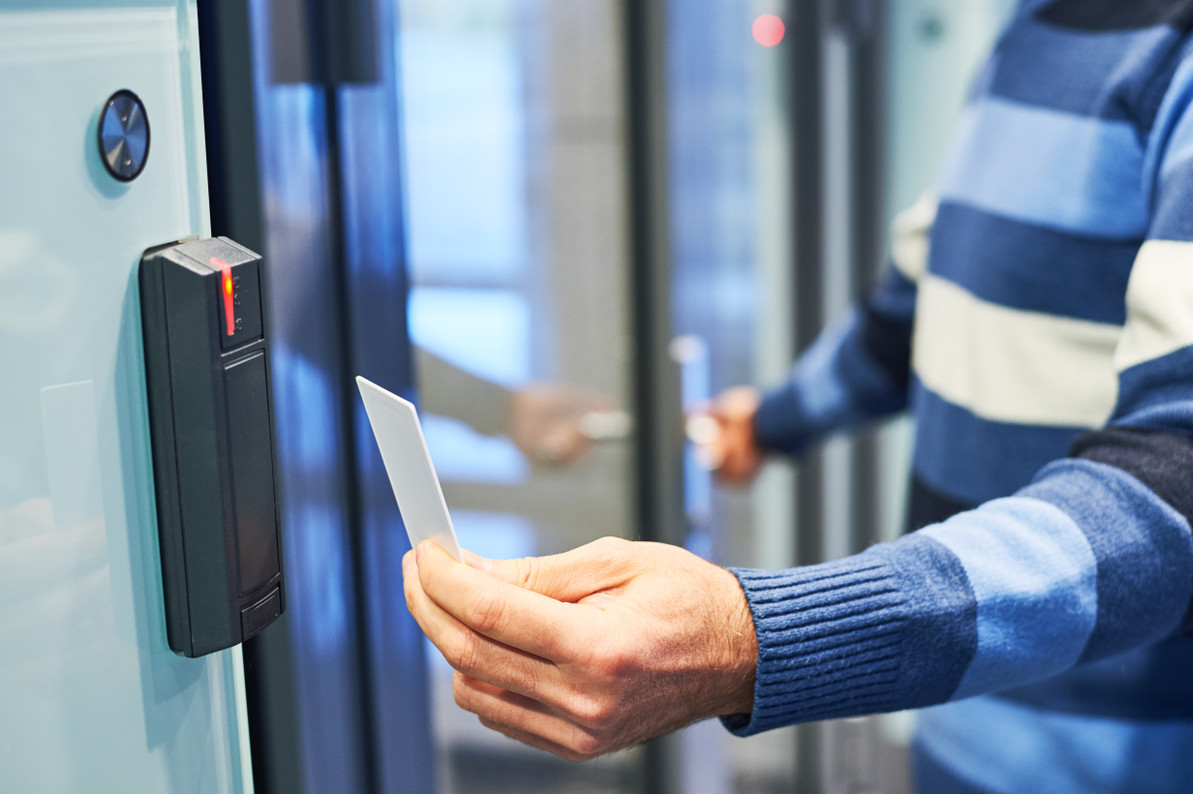
School entrance access control is the use of electronic security technologies to manage, monitor, and restrict who can enter educational facilities. Unlike traditional lock-and-key systems, access control solutions authenticate users using credentials such as proximity cards, smart cards, PIN codes, mobile credentials, or biometric verification before granting entry.
For elementary schools, access control systems help administrators secure building entrances during school hours while allowing authorized staff and approved visitors to enter efficiently. When integrated with surveillance cameras, visitor management systems, and emergency notification platforms, access control becomes the foundation of a comprehensive school security strategy.
Definition
Elementary School Access Control refers to the electronic management of entry points, allowing schools to verify identities, monitor activity, maintain audit trails, and restrict unauthorized access using intelligent door hardware and credential-based authentication.
School Security by the Numbers
Educational institutions continue to invest heavily in entrance security technologies as part of broader campus safety initiatives.
| Statistic | Why It Matters |
|---|---|
| Approximately 95% of U.S. public schools control visitor access during school hours. | Shows widespread adoption of controlled entrance procedures. |
| Most schools require visitors to report to a designated main office before accessing campus. | Supports centralized visitor screening and identification. |
| Cloud-managed security technologies continue to grow among K-12 districts due to centralized administration and simplified updates. | Demonstrates the shift toward scalable security management. |
| Integrated access control and video surveillance are increasingly recommended as part of comprehensive school security planning. | Highlights the importance of combining technologies rather than relying on standalone systems. |
Sources: National Center for Education Statistics (NCES), SchoolSafety.gov, U.S. Department of Education, Cybersecurity and Infrastructure Security Agency (CISA), and Campus Safety Magazine.
Why Elementary Schools Require a Different Security Approach
Elementary schools differ significantly from middle schools, high schools, and universities because younger students require additional supervision, structured visitor procedures, and carefully managed entry points. Parents, guardians, volunteers, contractors, and delivery personnel routinely interact with school staff throughout the day, making controlled access essential without creating an unwelcoming environment.
An effective elementary school entrance security strategy focuses on protecting students while maintaining an inviting atmosphere for families and the surrounding community. This requires layered security that combines physical barriers, electronic access control, trained personnel, and clear operational policies.
The Five Layers of Elementary School Entrance Security
The most effective school entrance security strategies do not rely on a single technology. Instead, they use multiple overlapping layers that work together to reduce risk and improve response capabilities.
| Layer | Purpose |
|---|---|
| Physical Security | Doors, locks, reinforced glass, vestibules, fencing |
| Electronic Access Control | Credential readers, controllers, electronic locks |
| Visitor Management | Identity verification, visitor badges, check-in software |
| Video Surveillance | Live monitoring, recorded evidence, video verification |
| Emergency Response | Lockdown integration, emergency notifications, coordinated response |
Education Security Tip
Limiting public access to a single monitored entrance is one of the most effective ways to improve elementary school security. Combining controlled entry with visitor management, video intercoms, and access control significantly reduces opportunities for unauthorized access while improving accountability.
Choosing the Right Access Control Technology for Elementary School Entrances
Not every elementary school requires the same level of access control. A single-building rural school has very different security requirements than a large suburban campus with multiple classroom wings, gymnasiums, and administrative offices. Selecting the right technology begins with understanding how people move through the building each day. The goal is to allow authorized staff to enter quickly while preventing unauthorized access and maintaining a positive experience for parents and visitors.
The Core Components of a School Entrance Access Control System
Modern school door access systems consist of several integrated technologies working together to control entry, monitor activity, and create detailed audit trails.
| Component | Purpose |
|---|---|
| Door Controller | The "brain" of the system that manages door permissions and communicates with credential readers. |
| Credential Reader | Authenticates users through cards, fobs, mobile credentials, or biometric verification. |
| Electronic Lock | Secures doors while allowing remote unlocking when authorized. |
| Management Software | Allows administrators to create users, schedules, reports, and security policies. |
| Cloud or Local Server | Stores system data and allows centralized administration. |
Credential Options for Elementary Schools
Credentials determine how authorized users gain entry into secured school buildings. Selecting the appropriate credential technology depends on security requirements, convenience, lifecycle costs, and administrative preferences.
| Credential Type | Advantages | Best For |
|---|---|---|
| Proximity Cards | Low cost, easy deployment | Teachers and staff |
| Smart Cards | Higher security with encryption | District-wide deployments |
| Mobile Credentials | Uses smartphones instead of cards | Faculty and administrators |
| PIN + Card Authentication | Additional verification | High-security entrances |
Education Security Tip
Mobile credentials eliminate lost or forgotten ID cards while allowing administrators to instantly activate or revoke access permissions remotely.
Why Mobile Credentials Are Becoming Popular in K-5 Schools
Many school districts are moving toward mobile credentials, allowing teachers and staff to use smartphones instead of physical badges. Because credentials are managed digitally, administrators can quickly issue, suspend, or update permissions without replacing physical cards.
Benefits of Mobile Credentials
- Reduced replacement costs for lost cards
- Remote credential management
- Encrypted communications
- Supports multi-factor authentication
- Improved user convenience
- Scalable across multiple campuses
Video Intercom Systems for School Entrances
A video intercom system allows office personnel to visually verify visitors before remotely unlocking the entrance. This technology provides an additional layer of security by requiring visitors to communicate with school staff before entering the building.
When integrated with access control and surveillance cameras, video intercoms create a secure, user-friendly visitor screening process.
Typical Visitor Process
- Visitor approaches secured entrance.
- Presses video intercom call button.
- Office staff verifies identity.
- Staff remotely unlocks the entrance.
- Visitor checks in through visitor management software.
- Temporary badge is issued.
Integrating Visitor Management Systems
Visitor management software works alongside access control by identifying guests before they enter secured areas. Many schools require government-issued identification, perform watch-list screening where applicable, print visitor badges, and maintain digital visitor logs.
| Visitor Management Feature | Security Benefit |
|---|---|
| Photo Identification | Confirms visitor identity. |
| Digital Visitor Log | Creates searchable visitor history. |
| Temporary Badge Printing | Clearly identifies approved visitors. |
| Integration with Access Control | Allows temporary access permissions when appropriate. |
Access Control + Lockdown Integration
One of the greatest advantages of electronic access control is its ability to support emergency response. Integrated systems can quickly secure designated doors while allowing emergency responders and authorized personnel to maintain access according to predefined policies.
When integrated with emergency notification systems, video surveillance, and school safety procedures, access control becomes an essential component of a comprehensive emergency preparedness strategy.
Featured Education Security Solutions
- Cloud-Based Access Control Platforms
- Enterprise Door Controllers
- Electronic Door Hardware
- HID Global Readers & Credentials
- Axis Network Video Intercom Systems
- Avigilon Alta Cloud Access Control
- Visitor Management Solutions
- Emergency Lockdown Integration
- Mobile Credential Platforms
FERPA & Student Privacy Considerations
When implementing school entrance access control systems, security must always be balanced with student privacy. Access control systems often integrate with surveillance cameras, visitor management software, identity databases, and emergency notification systems. Schools should ensure that these technologies are configured to protect personally identifiable information (PII) while supporting campus safety objectives.
Although access control credentials themselves are generally not considered education records, reports, visitor logs, and integrated surveillance systems may become subject to district policies and applicable privacy regulations depending on how they are used and maintained.
FERPA Best Practices
- Restrict administrative access using role-based permissions.
- Maintain audit logs showing who accessed security records.
- Encrypt stored credential databases whenever possible.
- Develop documented data retention policies.
- Limit access to visitor records to authorized personnel.
- Train staff on student privacy responsibilities.
ADA Accessibility Requirements
Access control systems should improve security without creating barriers for students, visitors, faculty, or individuals with disabilities. Electronic access hardware should support ADA-compliant operation while maintaining appropriate security.
| Accessibility Requirement | Implementation Example |
|---|---|
| Accessible Door Hardware | Lever handles and ADA-compliant electronic hardware. |
| Automatic Operators | Power-assisted doors where appropriate. |
| Accessible Credential Readers | Mounted at accessible heights with adequate clearance. |
| Emergency Egress | Doors must always allow safe exit during emergencies. |
Schools should consult local building officials, architects, and life-safety professionals when designing entrance security projects.
Fire Code & Life Safety Considerations
One of the most common misconceptions is that stronger security always means locking more doors. In reality, school access control systems must be designed to comply with fire codes, emergency egress requirements, and local life safety regulations.
Electronic locks should integrate appropriately with fire alarm systems so designated doors unlock automatically when required during emergency evacuation events.
Life Safety Tip
Security should never prevent safe evacuation. Every access control project should be reviewed alongside fire alarm, emergency notification, and life safety systems before installation.
Cybersecurity Best Practices for School Access Control
Today's access control systems are connected devices. They communicate across local networks, cloud platforms, mobile applications, video management software, and directory services. As a result, cybersecurity is just as important as physical security.
Recommended Cybersecurity Checklist
- Replace all default usernames and passwords.
- Enable multi-factor authentication for administrators.
- Keep firmware and software updated.
- Separate security devices from student networks using VLANs where appropriate.
- Use encrypted communication between controllers and management software.
- Review user permissions regularly.
- Monitor system logs for unusual activity.
- Create disaster recovery and backup procedures.
The Cybersecurity and Infrastructure Security Agency (CISA) recommends layered cybersecurity protections for network-connected physical security systems, including access control and surveillance technologies.
Cloud vs. On-Premises Access Control
Elementary schools increasingly evaluate cloud-managed access control systems alongside traditional on-premises deployments. Each approach offers unique operational advantages.
| Feature | Cloud Access Control | On-Premises |
|---|---|---|
| Deployment | Hosted by provider | Local servers |
| Remote Management | Excellent | VPN or local network |
| Scalability | Very High | Hardware expansion required |
| Maintenance | Vendor managed | School IT managed |
| Best Fit | Growing districts & multiple campuses | Schools requiring local infrastructure control |
Budget Planning for Elementary School Access Control
Developing a realistic budget involves more than estimating hardware costs. School districts should evaluate the total cost of ownership, including software licensing, maintenance, expansion, and staff training.
Budget Categories
- Electronic door hardware
- Credential readers
- Door controllers
- Management software
- Cloud licensing or server infrastructure
- Installation labor
- Network upgrades
- Training
- Ongoing maintenance
- Future expansion
Common Mistakes Schools Make
| Mistake | Recommended Approach |
|---|---|
| Securing only the front entrance | Protect secondary entrances and staff doors as well. |
| Ignoring visitor management | Integrate visitor screening with access control. |
| Purchasing without planning | Conduct a professional security assessment first. |
| No cybersecurity strategy | Include IT departments early in project planning. |
| No future expansion plan | Choose scalable platforms that support additional buildings and technologies. |
Step-by-Step Implementation Guide
- Perform a campus security assessment.
- Identify all public and staff entrances.
- Determine which doors require electronic control.
- Select credential technologies.
- Integrate visitor management and video intercoms.
- Connect access control with surveillance cameras.
- Integrate emergency lockdown capabilities.
- Develop user permission policies.
- Train faculty, staff, and administrators.
- Review and audit the system annually.
Education Security Insight
The most effective elementary school entrance security projects combine electronic access control, visitor management, surveillance cameras, emergency communications, cybersecurity, and clearly documented operational procedures. Technology is most effective when paired with well-trained staff and regularly reviewed security policies.
Request a School Security Assessment
Every elementary school has unique security challenges. Whether your campus is planning a new construction project, upgrading aging door hardware, or implementing cloud-based access control, a professional security assessment can help identify vulnerabilities and prioritize improvements.
Schedule Your Consultation
Quick Answers (Featured Snippet Optimization)
What is school entrance access control?
School entrance access control is an electronic security system that restricts building access to authorized individuals using credentials such as key cards, mobile devices, PINs, or biometric authentication. These systems improve student safety, simplify visitor management, and provide administrators with detailed access records.
Why should elementary schools secure their entrances?
Controlled entrances help reduce unauthorized access, improve visitor screening, support emergency response procedures, and provide safer learning environments for younger students who require greater supervision.
What technologies work best together?
The strongest school entrance security combines access control, visitor management, video intercoms, surveillance cameras, emergency notifications, and video management systems into one integrated solution.
Frequently Asked Questions
1. What is the best access control system for elementary schools?
Systems that integrate electronic door controllers, credential readers, visitor management, surveillance cameras, and emergency response features are typically the most effective.
2. Can schools use cloud-based access control?
Yes. Cloud-based solutions simplify administration, support multiple campuses, and allow authorized staff to manage systems remotely.
3. What are mobile credentials?
Mobile credentials allow authorized users to unlock secured doors using a smartphone instead of a physical access card.
4. Are electronic door locks ADA compliant?
Many electronic locking solutions are designed to support ADA accessibility requirements when installed according to applicable building codes.
5. How do visitor management systems improve school security?
They verify visitor identities, issue temporary badges, maintain digital logs, and help schools monitor who is on campus.
6. Should access control integrate with surveillance cameras?
Yes. Video verification provides visual confirmation of door events and supports investigations when incidents occur.
7. How often should access permissions be reviewed?
Schools should review user permissions regularly and immediately remove access for employees or contractors who no longer require entry.
8. Can access control support emergency lockdown procedures?
Modern systems can integrate with emergency notification platforms and predefined lockdown procedures while supporting life safety requirements.
9. What is the difference between cloud and on-premises access control?
Cloud systems are managed online and simplify remote administration, while on-premises systems are managed through local infrastructure.
10. How long do access control systems last?
Quality hardware often remains in service for many years when properly maintained, though software and cybersecurity updates should be applied regularly.
11. Should schools secure every entrance?
Schools should evaluate all entrances and secure those that could provide unauthorized access while maintaining safe emergency egress.
12. How do access control systems help with audits?
Electronic systems create detailed logs showing who entered specific areas and when access events occurred.
13. Can access control integrate with school video management systems?
Yes. Integration allows administrators to associate access events with recorded video for improved situational awareness.
14. Why are cybersecurity updates important?
Network-connected security devices should receive regular firmware and software updates to reduce cybersecurity risks and improve reliability.
15. Where should schools begin?
Most districts begin with a professional security assessment that evaluates campus layout, visitor flow, existing infrastructure, and long-term security goals.
Related School Security Resources
- Complete Guide to School Security Cameras
- School Access Control Systems Guide
- Video Management Systems (VMS) for Schools
- Visitor Management Systems
- School Lockdown Systems
- Mobile Credentials for Schools
- Cloud Security Solutions
Protect Your Elementary School with a Modern Access Control Solution
The most effective school security strategies combine intelligent access control, visitor management, surveillance cameras, emergency communications, and ongoing cybersecurity practices. Affinitech Store provides integrated solutions designed specifically for K-12 educational environments.
Contact an Education Security Specialist Request a QuoteSources: National Center for Education Statistics (NCES), SchoolSafety.gov, U.S. Department of Education, Cybersecurity and Infrastructure Security Agency (CISA), National Institute of Justice (NIJ), Campus Safety Magazine. Always verify current federal, state, and local regulations before implementing school security policies or technologies.
Recent Posts
-
Access Control & Visitor Management Systems for Elementary Schools | Affinitech
Access Control & Visitor Management Systems for Elementary Schools Elementary schools need security … -

Cloud vs. On-Prem VMS for Schools: Complete Guide | Affinitech
Cloud vs On-Prem VMS for Schools: Complete Guide to School Video Management Systems Should … -
School Door Access Systems: Complete Guide to Secure School Entrances | Affinitech Store
School Door Access Systems: Complete Guide to Secure School Entrances Modern school door access … -

How AI Cameras Help Protect Younger Students | Elementary School Security Guide | Affinitech Store
How AI Cameras Help Protect Younger Students Discover how artificial intelligence is transformin …