
Access Control & Visitor Management Systems for Elementary Schools | Affinitech
Access Control & Visitor Management Systems for Elementary Schools
Elementary schools need security systems that protect young students while keeping the arrival and visitor experience simple, welcoming and efficient. Modern school access control and visitor management systems can help schools control entry points, verify visitors, manage credentials, monitor doors and connect entrance security with video surveillance.
Quick Answer: An effective elementary school entrance security system combines controlled doors, visitor identification, credential management, video surveillance, staff procedures and emergency response capabilities. Visitor management determines who is authorized to enter, while access control determines which doors authorized people can open.
Secure Your Elementary School Entrance
Planning a new elementary school access control or visitor management system? Affinitech can help evaluate cameras, access control, credentials, door hardware, visitor management and integrated security technologies.
Request a School Security AssessmentWhy Elementary Schools Need Specialized Access Control and Visitor Management
Elementary schools have a unique security environment. Young children may be less capable of recognizing potential threats, classrooms are often located close to public entrances, parents and guardians frequently enter the building, and schools may host volunteers, contractors, therapists, substitute teachers and other visitors throughout the day.
For these reasons, elementary school access control should do more than simply lock and unlock doors. A properly designed system should establish controlled entry points, provide staff with visibility into visitors, manage credentials and support a documented process for identifying and tracking people entering the building.
A visitor management system can add another layer by allowing schools to register visitors, issue temporary identification badges and maintain records of visitor activity. When integrated with cameras and access control, the resulting system can provide security personnel and administrators with a more complete picture of activity at the school's primary entrance.
Elementary School Access Control & Visitor Management Statistics
Federal education data demonstrates how common controlled access and visitor management practices have become in American public schools.
97% of Public Schools Control Access to School Buildings
According to the National Center for Education Statistics (NCES), 97 percent of public schools reported controlling access to school buildings during school hours in the 2021–22 school year.
97% Require Visitors to Check In and Wear Identification
NCES also reported that 97 percent of public schools required visitors to sign or check in and wear badges during the 2021–22 school year.
Elementary Schools Report Particularly High Use of Controlled Building Access
NCES data shows that approximately 98 percent of public elementary schools reported controlling access to school buildings during school hours in 2021–22.
Source: National Center for Education Statistics, School Survey on Crime and Safety.
Source: U.S. Department of Education, National Center for Education Statistics (NCES), Safety and Security Practices at Public Schools and School Survey on Crime and Safety data.
What Is an Elementary School Access Control System?
An elementary school access control system is a security system that electronically manages who is authorized to enter specific school buildings, rooms or other controlled areas.
Unlike a traditional mechanical key, electronic access control can associate a person with a credential, establish schedules, record access events and allow administrators to change permissions without physically replacing door locks.
Common School Access Control Components
- Electronic door locks
- Card readers
- Mobile credential readers
- Keypad readers
- Biometric readers where appropriate
- Access control panels
- Door position sensors
- Request-to-exit devices
- Exit hardware
- Video intercoms
- Security cameras
- Access control management software
What Is a School Visitor Management System?
A school visitor management system is technology used to register, identify, authorize and monitor visitors entering an educational facility.
Depending on the platform, visitor management may allow a school to collect visitor information, scan identification, compare visitor information against designated databases, print temporary badges, record arrival and departure times, and notify appropriate personnel.
CISA's K-12 School Security Guide describes visitor management systems as technologies capable of screening visitors, checking designated databases, issuing visitor badges and maintaining visitor records. CISA also emphasizes that technology should operate as part of a broader physical-security strategy that includes people, policies and building design.
Access Control vs. Visitor Management
| Technology | Primary Function |
|---|---|
| Access Control | Determines which authorized people can unlock or enter controlled doors. |
| Visitor Management | Registers, identifies, badges and tracks visitors entering the school. |
| Video Surveillance | Provides visual verification and recorded evidence of activity. |
What Makes Elementary School Access Control Different?
A security system designed for an elementary school should account for the age of students, parent and guardian traffic, school schedules, classroom layouts and the need for staff to maintain a welcoming environment.
1. Controlled Main Entrance
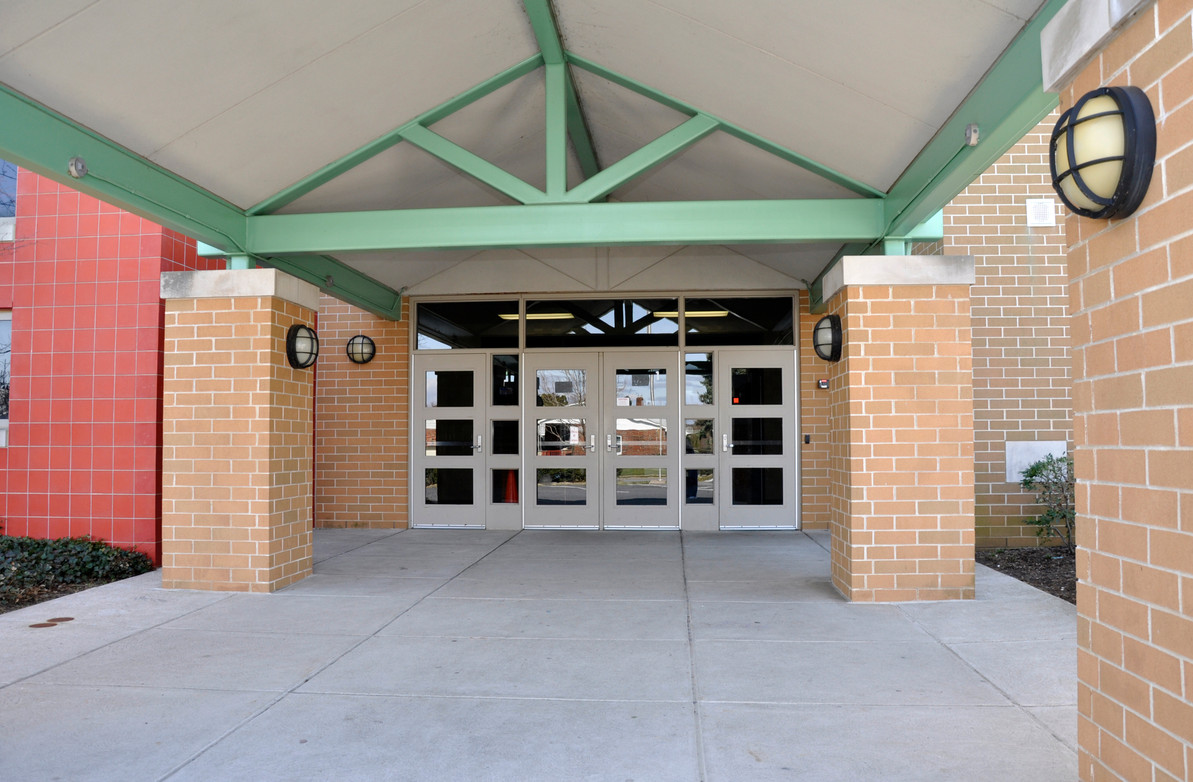
The main entrance should typically function as the primary controlled point of entry during normal school hours. Schools can combine an access-controlled door with a video intercom, security camera and visitor management station.
2. Parent and Guardian Management
Elementary schools often experience significant parent and guardian interaction during arrival, dismissal, classroom events, conferences and extracurricular activities. Visitor management can help staff distinguish authorized visitors from unknown individuals.
3. Staff Credentials
Teachers, administrators, custodial employees and other authorized personnel may require credentials that provide access to specific doors and schedules.
4. Temporary Visitors
Contractors, volunteers, substitute teachers and other temporary visitors may require limited access. Visitor management systems can provide temporary credentials or badges rather than relying on permanent keys or unrestricted access.
5. Emergency Considerations
Access control should be designed alongside the school's emergency procedures. Door hardware, electronic locks, emergency exits, fire-life-safety requirements and lockdown procedures must be evaluated together rather than independently.
The Ideal Elementary School Entrance Security Workflow
A well-designed elementary school entrance can use several complementary security layers.
Step 1
Visitor approaches the designated school entrance.
Step 2
Video intercom or camera provides visual awareness.
Step 3
Visitor checks in through the visitor management system.
Step 4
Authorized visitor receives appropriate identification.
Step 5
Access is granted according to school policy.
Step 6
Visitor activity can be recorded for security and administrative purposes.
Integrating Visitor Management With School Access Control
Visitor management becomes significantly more useful when it is integrated with the school's broader security infrastructure.
| System | How It Supports Visitor Security |
|---|---|
| Access Control | Controls authorized access through designated doors. |
| Visitor Management | Registers visitors and manages temporary identification. |
| Video Surveillance | Provides visual verification and recorded video. |
| Video Intercom | Allows staff to communicate with visitors before granting entry. |
| Emergency Notification | Provides communication during emergencies or security incidents. |
Explore the Complete School Security Strategy
Visitor management should be considered one component of a larger educational security strategy. Explore these related Affinitech resources:
Build a Safer Elementary School Entrance
The right combination of access control, visitor management, video surveillance and security policies can help elementary schools create a more controlled and accountable entrance environment.
Request a School Security Assessment Contact an Education Security SpecialistSources
National Center for Education Statistics (NCES), U.S. Department of Education, Safety and Security Practices at Public Schools, School Survey on Crime and Safety.
Cybersecurity and Infrastructure Security Agency (CISA), K-12 School Security Guide and related school physical security guidance.
Key Features of Visitor Management Systems for Elementary Schools
A modern visitor management system for elementary schools should help school administrators create a consistent process for identifying and tracking visitors while minimizing disruption to staff and families. The specific capabilities will vary by manufacturer and deployment model, but several features are particularly valuable in K-5 environments.
Visitor Check-In
Electronic visitor check-in can replace or supplement paper sign-in procedures. Depending on the system, visitors may enter their information at a kiosk or reception workstation and receive a temporary identification badge.
Visitor Identification
Some visitor management platforms can scan identification documents and automatically populate visitor information. This can reduce manual data entry and create a more consistent registration process.
Temporary Visitor Badges
Temporary badges provide staff with a visual indication that a person has completed the school's visitor process. Badges may include a visitor's name, photograph, destination, expiration time or other information determined by school policy.
Visitor Check-Out
A complete visitor management workflow should also account for departure. Recording when visitors leave can provide administrators with a more accurate picture of who is currently inside the facility.
Visitor History and Reporting
Depending on the platform and school policy, administrators may be able to review visitor activity, generate reports and maintain records associated with facility access.
Access Permissions
Access control systems can assign different permissions to teachers, administrators, maintenance personnel, contractors and other authorized individuals. This allows schools to limit access according to role, location and schedule.
How to Design a Secure Elementary School Entrance
The primary entrance is often the most important location when developing an elementary school access control system. Rather than treating the entrance door as an isolated security device, schools should evaluate the entire visitor journey from the parking area or sidewalk to the reception area.
Layer 1: Clearly Identified Main Entrance
Visitors should be able to easily identify the designated entrance. Clear signage can direct parents, guardians, contractors and other visitors toward the appropriate entry point while reducing the likelihood that visitors will attempt to enter through unauthorized doors.
Layer 2: Controlled Exterior Door
An electronically controlled exterior door can help prevent unauthorized entry while allowing authorized staff members to use credentials appropriate to their role.
Layer 3: Video Surveillance
A dedicated school entrance security camera can provide visual awareness of the doorway and surrounding approach. A camera positioned to capture faces and activity at the entrance can also support incident investigation.
Layer 4: Two-Way Communication
A video intercom or audio intercom can allow authorized staff to communicate with visitors before opening a controlled entrance. This can be particularly useful when the reception area is not immediately adjacent to the exterior door.
Layer 5: Visitor Check-In
After entering the designated reception area, visitors can complete the school's registration procedure using a visitor management system.
Layer 6: Interior Separation
Where appropriate, schools can use additional controlled doors to separate public reception areas from classrooms, administrative offices and student areas.
Security design principle: The goal is not simply to add more locked doors. The goal is to create a predictable, manageable visitor pathway while maintaining appropriate life-safety, accessibility and emergency-egress requirements.
Access Credentials for Elementary School Staff
One of the advantages of electronic school door access systems is the ability to issue credentials based on individual users rather than relying entirely on physical keys.
| Credential Type | Potential School Application | Considerations |
|---|---|---|
| Proximity / RFID Card | Teachers and staff | Simple and familiar credential format. |
| Smart Card | Staff and higher-security applications | Can support more advanced credential technologies. |
| Mobile Credential | Teachers, administrators and authorized staff | Uses compatible mobile devices instead of traditional cards. |
| PIN / Keypad | Specific controlled areas | PIN management and sharing policies are important. |
| Biometric | Specialized applications | Requires careful consideration of privacy, policy and applicable law. |
Mobile Credentials for Schools
Mobile credentials can allow authorized personnel to use a compatible smartphone or other mobile device as an access credential. For schools already moving toward cloud-managed access control, mobile credentials can provide an alternative to issuing and replacing physical cards.
Staff Access vs. Visitor Access in Elementary Schools
A common mistake in school security planning is treating every person entering a building as having the same access requirements. An effective system should distinguish between permanent staff, temporary personnel, visitors and emergency responders.
| User | Typical Access Approach |
|---|---|
| Teachers | Individual credentials with access based on role and schedule. |
| Administrators | Expanded access based on administrative responsibilities. |
| Custodial Staff | Access to appropriate maintenance areas and scheduled facilities. |
| Substitute Teachers | Temporary credential with limited duration where supported. |
| Contractors | Temporary visitor registration and controlled access. |
| Parents / Guardians | Visitor registration and identification according to school policy. |
Integrating School Access Control With Security Cameras
Access control and video surveillance are more effective when they operate as complementary systems. A camera can show what happened at a door, while access control can provide information about the credential or access event associated with that door.
Door Event + Video Verification
For example, an administrator reviewing an unusual door event may be able to correlate the access-control record with video from a nearby camera. This can provide additional context that neither system would provide alone.
School Entrance Monitoring
A camera positioned at the primary entrance can provide visual awareness while the access control system controls the physical door.
Door-Forced-Open Events
Door position sensors can identify conditions such as a door being opened outside expected conditions. Depending on the security platform, these events may generate alerts or be associated with video recordings.
For a deeper discussion of school surveillance technology, see the Affinitech guide: Complete Guide to School Security Cameras for K-12 & Higher Education .
Recommended Visitor Management Workflow for Elementary Schools
A visitor management system should support the school's established policies rather than replace them. A typical workflow may include the following steps.
- Visitor arrives at the designated entrance.
The visitor is directed toward the school's controlled primary entrance. - Visitor interacts with staff or the entry system.
A video intercom, reception desk or other procedure establishes communication with the visitor. - Visitor completes registration.
The visitor provides information required by school policy. - Identification is verified according to policy.
Where required and legally appropriate, the visitor's identification can be checked using the school's approved procedure. - Visitor receives temporary identification.
A visitor badge can indicate that the individual has completed the school's registration procedure. - Access is limited to the appropriate area.
Visitors should not automatically receive unrestricted access to the school. - Visitor checks out.
The system or staff procedure records the visitor's departure.
Cloud vs. On-Premises Visitor Management for Elementary Schools
Schools have multiple options when deploying access control and visitor management technology. Cloud-managed systems can simplify centralized administration, while on-premises platforms may provide greater local control over infrastructure.
| Consideration | Cloud-Based | On-Premises |
|---|---|---|
| Administration | Centralized browser-based management is common. | Typically managed through local infrastructure. |
| Multi-School Management | Well suited to centralized district management. | May require additional infrastructure or administration. |
| Maintenance | Some infrastructure maintenance may be handled by provider. | School or district IT generally manages local systems. |
| Connectivity | Internet connectivity is typically important for management. | Local systems can reduce dependence on external connectivity for some functions. |
| Scalability | Often convenient for expanding across multiple schools. | Can scale but may require additional hardware and infrastructure. |
The best choice depends on the district's IT resources, security requirements, existing infrastructure, budget model and long-term technology strategy.
Learn more about video infrastructure and VMS deployment in the Affinitech resource: Video Management Systems (VMS) for Schools & Universities .
Pros and Cons of Visitor Management Systems for Elementary Schools
Advantages
- Creates a consistent visitor check-in process.
- Provides temporary visitor identification.
- Can reduce reliance on paper visitor logs.
- Can improve awareness of who is inside a facility.
- Can integrate with access control and video systems.
- Can support centralized reporting.
- Can scale across multiple school buildings.
Considerations
- Requires initial technology investment.
- Staff need training and documented procedures.
- Visitor data requires appropriate privacy controls.
- Systems require ongoing administration.
- Integration may require additional planning.
- Network and cybersecurity requirements must be considered.
- Hardware must be compatible with existing doors and life-safety systems.
Elementary School Visitor Management Use Cases
Parent and Guardian Visits
Parent-teacher conferences, classroom events and other activities can create significant visitor traffic. A consistent check-in process can help staff distinguish registered visitors from individuals who have not completed the school's entry procedure.
Contractors and Vendors
Maintenance contractors and vendors may require access to portions of a school without requiring unrestricted building access. Temporary visitor credentials and time-based permissions can help support this workflow where the selected platform provides those capabilities.
Volunteers
Schools frequently rely on volunteers for events, classroom activities and extracurricular programs. Visitor management can provide a standardized process for identifying and documenting volunteer access.
Substitute Teachers
Temporary staff may require credentials that differ from those assigned to permanent employees. An integrated access-control platform can simplify temporary credential management where supported.
After-School Activities
School buildings may remain occupied after normal classroom hours for sports, clubs, community events and other programs. Access schedules can help administrators manage who can enter controlled areas during those periods.
Recommended Technology Categories for Elementary School Entrances
There is no single access control or visitor management product that is appropriate for every elementary school. Instead, schools should select components that work together as part of a complete entrance security architecture.
| Technology Category | Elementary School Application |
|---|---|
| Access Control Readers | Control authorized staff access at exterior and interior doors. |
| Electronic Locks | Provide electronic control of compatible doors. |
| Mobile Credentials | Provide smartphone-based credentials for authorized users where supported. |
| Visitor Management | Register and identify visitors and manage temporary badges. |
| Video Surveillance | Monitor entrances and provide recorded video. |
| Video Intercom | Allow staff to communicate with visitors before granting entry. |
| Video Management System | Centralize camera monitoring, recording and investigation. |
Not Sure Which School Access Control System You Need?
Every elementary school has different doors, schedules, visitor policies, network infrastructure and security objectives. Affinitech can help you evaluate the technology options and develop a system appropriate for your facility.
Request a School Security Assessment Contact an Education Security SpecialistWhat's Next: Selecting the Right Elementary School Access Control System
Selecting the right system requires more than comparing reader prices. Schools should evaluate door types, credential technology, visitor workflows, software architecture, cybersecurity, integrations, scalability, emergency procedures and long-term support.
The next section of this guide will provide a practical elementary school access control buying guide, including implementation steps, budgeting considerations, common mistakes, security and compliance considerations, product-category recommendations and frequently asked questions.
How to Choose the Best Access Control and Visitor Management System for an Elementary School
Choosing the right access control for schools requires more than selecting an electronic lock or card reader. An effective elementary school security solution should address the complete building-entry process, including staff access, visitor identification, door control, video surveillance, emergency procedures, cybersecurity and long-term system management.
School administrators, facilities managers and IT departments should evaluate both current requirements and future expansion before purchasing a system. A solution that works for one building may not provide the centralized management, reporting or scalability required by a growing school district.
1. Evaluate the Existing Doors
Begin with a complete door inventory. Identify exterior doors, classroom doors, administrative offices, mechanical rooms, storage areas, gym entrances, cafeteria entrances and other controlled openings.
Document the existing lock hardware, door condition, power availability, network connectivity and emergency-egress requirements. Not every door will require the same access-control hardware.
2. Identify Who Needs Access
Create user groups for teachers, administrators, custodial employees, substitute teachers, contractors, volunteers and other authorized personnel. Assign access according to job responsibilities rather than providing everyone with unrestricted building access.
3. Define the Visitor Workflow
Determine how parents, guardians, volunteers and contractors should enter the facility. Establish where visitors check in, how identification is handled, when badges are issued, how visitors are directed and how departures are recorded.
4. Determine Credential Requirements
Decide whether the school will use proximity cards, smart cards, mobile credentials, PINs or another supported credential technology. District-wide credential standards can simplify administration when multiple schools use the same access-control platform.
5. Evaluate Integration Requirements
Determine whether the access control system should integrate with security cameras, video management systems, intercoms, emergency notification platforms, intrusion detection or other school security technologies.
Elementary School Access Control Buying Checklist
Use the following checklist when evaluating school door access systems and visitor management platforms.
- ☐ Primary entrance identified and evaluated
- ☐ Exterior doors inventoried
- ☐ Interior controlled doors identified
- ☐ Existing lock hardware evaluated
- ☐ Staff credential requirements documented
- ☐ Visitor check-in procedure defined
- ☐ Temporary visitor credential requirements defined
- ☐ Video surveillance requirements identified
- ☐ Emergency and lockdown procedures reviewed
- ☐ Network requirements evaluated
- ☐ Cybersecurity requirements evaluated
- ☐ Privacy policies reviewed
- ☐ Future expansion requirements considered
- ☐ District-wide management requirements considered
- ☐ Total cost of ownership evaluated
Step-by-Step Implementation Guide for Elementary School Access Control
Implementing school access control should be treated as a security and facilities project rather than simply an installation of door hardware.
Step 1 — Conduct a Security Assessment
Review entrances, doors, visitor flow, campus layout, existing security systems and potential vulnerabilities.
Step 2 — Create a Door Schedule
Document each opening that may require electronic access control and determine the appropriate hardware and authorization requirements.
Step 3 — Establish User Groups
Define access permissions for teachers, administrators, maintenance staff, contractors, substitute teachers and other authorized personnel.
Step 4 — Select Visitor Management Procedures
Determine how visitors will be registered, identified, badged, escorted and checked out.
Step 5 — Select Access Control Hardware
Choose readers, controllers, locks, request-to-exit devices, door-position switches and related hardware appropriate for each opening.
Step 6 — Integrate Video and Intercom
Where appropriate, connect entrance cameras, video intercoms and the video management system to the access-control environment.
Step 7 — Configure Policies
Configure access schedules, user permissions, visitor procedures, badge expiration and administrative responsibilities.
Step 8 — Test the System
Test normal entry, denied access, door alarms, visitor registration, badge expiration, emergency procedures and system notifications.
Step 9 — Train Staff
Train administrators, reception personnel, teachers and security personnel on the functions relevant to their roles.
Step 10 — Review and Maintain
Review access permissions regularly, remove former employees, update software and firmware where appropriate, test hardware and audit visitor procedures.
Budget Planning for Elementary School Access Control
The cost of a school access control project depends on the number and type of doors, existing infrastructure, credential technology, visitor management requirements, software licensing, network requirements, installation complexity and integrations.
Instead of evaluating systems strictly by the cost of a reader or lock, schools should evaluate the total cost of ownership.
| Cost Category | What to Evaluate |
|---|---|
| Door Hardware | Locks, readers, controllers, sensors and related hardware. |
| Installation | Electrical, low-voltage, door and network installation requirements. |
| Software | Licensing, subscriptions and management software. |
| Visitor Management | Kiosks, badge printers, software and related components. |
| Networking | Switches, cabling, network segmentation and connectivity. |
| Maintenance | Support, replacement hardware, updates and system administration. |
Compliance, Privacy and Life-Safety Considerations
School access control and visitor management systems can involve sensitive information and physical security controls. Schools should establish policies appropriate to their jurisdiction and consult qualified legal, security, fire/life-safety and accessibility professionals when necessary.
FERPA and Student Information
Visitor management platforms may collect information associated with visitors, students or educational activities. Schools should determine what information is collected, why it is collected, who can access it and how long it is retained.
State Privacy Requirements
Privacy requirements can vary significantly between states and jurisdictions. Schools should review applicable state and local requirements governing surveillance, personal information and electronic records.
Accessibility
Entry systems should be evaluated for accessibility requirements. Reader placement, door hardware, intercoms and visitor kiosks should be appropriate for the users who need to interact with them.
Fire and Life Safety
Electronic access control must be coordinated with applicable fire, emergency-egress and life-safety requirements. Door locking strategies should never be designed independently of those requirements.
Important: Compliance requirements vary by school, jurisdiction, building type and system design. This article provides general educational information and should not be treated as legal, fire-code or regulatory advice.
Cybersecurity Best Practices for School Access Control Systems
Because modern access control systems are increasingly network-connected, cybersecurity should be included in the initial system design rather than addressed after installation.
- Use strong administrative credentials and unique passwords.
- Enable multi-factor authentication where supported.
- Keep access-control software and supported devices updated.
- Limit administrative privileges to authorized personnel.
- Segment security systems from general-purpose network traffic where appropriate.
- Monitor system logs and administrative activity.
- Remove credentials immediately when employees leave the organization.
- Use encrypted communications where supported.
- Develop an incident-response process for suspected cybersecurity events.
Common Mistakes Schools Make When Implementing Access Control
Mistakes to Avoid
- Installing hardware without conducting a door assessment.
- Giving too many users unrestricted access.
- Ignoring visitor check-in procedures.
- Failing to plan for credential termination.
- Overlooking network and cybersecurity requirements.
- Failing to integrate cameras with access events where useful.
- Ignoring future school expansion.
- Failing to train staff.
- Not documenting emergency procedures.
Better Approach
- Start with a comprehensive security assessment.
- Use role-based access permissions.
- Standardize visitor procedures.
- Automate credential management where practical.
- Include IT and cybersecurity personnel early.
- Design access control and video together.
- Select scalable technology.
- Train employees before deployment.
- Test the system regularly.
Recommended Product Categories for Elementary School Access Control
Affinitech Store can help schools evaluate access-control and security technologies from established manufacturers. The correct equipment depends on the school's doors, existing infrastructure, security policies and integration requirements.
Access Control Readers
Ideal for controlled staff entrances and interior doors. Options can include proximity, smart-card and mobile credential technologies.
Explore Access Control Solutions →Mobile Credentials
Mobile credentials can provide an alternative to traditional physical access cards for compatible school access-control platforms.
View Access Control Technology →School Security Cameras
Entrance cameras can provide visual awareness of visitors and access events while supporting security investigations.
School Security Camera Guide →Video Management Systems
A VMS can centralize camera monitoring, recording and investigation across one or multiple school buildings.
Explore School VMS Solutions →Request a School Security Assessment
Not sure where to start? Affinitech can help evaluate your elementary school's entrance security, access control, visitor management, video surveillance and related technologies.
Request a School Security Assessment Contact an Education Security SpecialistTalk With an Education Security Specialist
Tell us about your school security project and an Affinitech specialist can help identify appropriate technology categories and next steps.
Related School Security Resources
Continue building your school's security strategy with these related Affinitech resources:
Build a Safer, More Controlled School Entrance
A modern elementary school security strategy can combine access control, visitor management, video surveillance, intercoms and other technologies into a coordinated security architecture.
Whether you are securing one elementary school or developing a district-wide security standard, Affinitech can help you evaluate technology options based on your facility, operational requirements and long-term goals.
Contact an Education Security SpecialistQuick Answers: Elementary School Access Control
What is access control for elementary schools?
Access control for elementary schools is a security system that manages who is authorized to enter specific school buildings, doors or areas. It can use electronic locks, access-control readers, credentials, mobile devices, door controllers and software to manage authorized entry and provide an audit trail of access events.
What is a school visitor management system?
A school visitor management system is technology used to register, identify and manage visitors entering an educational facility. Depending on the system, it may support visitor registration, identification, temporary badges, check-in and check-out records, notifications and reporting.
How can elementary schools improve entrance security?
Elementary schools can improve entrance security by establishing a controlled primary entrance, implementing appropriate access control and visitor management, using entrance video surveillance, developing documented visitor procedures, reviewing emergency policies and regularly auditing authorized access.
Frequently Asked Questions About Access Control and Visitor Management for Elementary Schools
1. What is school access control?
School access control is a security technology used to control and monitor authorized entry into school buildings and restricted areas. Systems can include electronic locks, card readers, mobile credentials, controllers, door sensors and management software.
2. Why do elementary schools need access control?
Access control can help schools establish controlled entry, restrict unauthorized access, manage staff credentials and create records of access activity. It can also become part of a broader school security strategy that includes video surveillance and visitor management.
3. What are school door access systems?
School door access systems are electronic or networked systems that control access through designated doors. Depending on the application, they may use card readers, mobile credentials, PINs, electronic locks, door controllers and centralized management software.
4. What is a visitor management system for schools?
A visitor management system helps schools establish a consistent process for registering and managing visitors. Common capabilities include visitor check-in, identification, temporary badges, check-out records and administrative reporting.
5. Should an elementary school have a controlled main entrance?
Many schools use a controlled primary entrance to establish a predictable visitor entry point. The specific configuration should be based on the school's facility, security assessment, emergency procedures, local requirements and operational needs.
6. Can access control integrate with school security cameras?
Yes. Compatible access-control and video systems can often be integrated so security personnel can associate door events with video footage. This can improve situational awareness and simplify incident investigation.
7. Can schools use mobile credentials instead of access cards?
Some modern access-control platforms support mobile credentials, allowing authorized users to use compatible smartphones or mobile devices instead of traditional physical credentials. Compatibility depends on the access-control platform and reader technology.
8. How should schools manage former employees' access?
Schools should have a documented process for promptly disabling or removing access when employees, contractors or other authorized users no longer require access. Role-based permissions and centralized administration can simplify this process.
9. Can visitor badges improve school security?
Visitor badges can help staff distinguish registered visitors from students and employees. Depending on the visitor management platform, badges may include visitor identification, expiration information or other administrative details.
10. Should elementary schools use cloud-based access control?
Cloud-based access control can provide centralized management and remote administrative capabilities. Whether it is appropriate depends on the school's IT strategy, security requirements, network environment, vendor capabilities and total cost of ownership.
11. How often should school access permissions be reviewed?
Access permissions should be reviewed periodically and whenever staffing, building use or security policies change. Schools should also establish procedures for removing or modifying credentials when personnel change roles or leave the organization.
12. What should schools consider when choosing an access-control reader?
Schools should consider credential technology, environmental conditions, door hardware, user requirements, security policies, network architecture, compatibility with existing systems and future expansion.
13. Does school access control replace security personnel?
No. Access control is a technology component of a broader security program. Effective school security also depends on policies, trained personnel, emergency procedures, physical security, communication and appropriate supervision.
14. How much does an elementary school access control system cost?
Costs vary based on the number of controlled doors, door hardware, readers, controllers, credentials, software, visitor management, networking, installation and integrations. Schools should evaluate the complete project cost rather than the price of individual readers or locks.
15. How can Affinitech help with elementary school access control?
Affinitech can help schools evaluate access-control, visitor management, video surveillance and related security technologies based on their facility requirements, existing infrastructure and long-term security objectives.
Elementary School Security Definitions
| Term | Definition |
|---|---|
| Access Control | Technology and policies used to determine who is authorized to enter a controlled location. |
| School Door Access System | An electronic system used to control and monitor access through school doors. |
| Visitor Management | Processes and technologies used to register, identify and manage visitors entering a facility. |
| Credential | A card, mobile device, PIN or other authorized method used to verify access rights. |
| Access-Control Reader | A device that reads or receives a user's credential and communicates the access request to the system. |
| VMS | Video Management System used to manage, record, search and view security-camera video. |
SEO-Optimized Image ALT Text Recommendations
Use descriptive ALT text that accurately describes each image while naturally incorporating relevant search terminology. Avoid keyword stuffing or describing objects that are not actually visible in the image.
| Suggested Image | Recommended ALT Text |
|---|---|
| Elementary school entrance | elementary school entrance with controlled access and visitor management |
| Access-control reader | school door access control reader for authorized staff entry |
| Visitor kiosk | elementary school visitor management check-in kiosk |
| Security camera | school entrance security camera monitoring elementary school visitors |
| Access control dashboard | school access control management software showing authorized door access |
| Integrated security system | elementary school access control and video surveillance security system |
Secure Your Elementary School Entrance
A properly designed school access control and visitor management system can provide controlled entry, better visitor awareness and a stronger foundation for a comprehensive elementary school security strategy.
Request a School Security Assessment Contact an Education Security Specialist
Access Control and Visitor Management for Elementary Schools: Key Takeaways
- Elementary school access control helps manage authorized entry into school buildings and restricted areas.
- Visitor management establishes a consistent process for identifying, registering and tracking visitors.
- School door access systems can incorporate electronic locks, readers, controllers and credentials.
- Mobile credentials can provide an alternative to traditional physical access cards on compatible systems.
- Access control can be integrated with school security cameras and video management systems.
- Schools should evaluate cybersecurity, privacy, accessibility, emergency procedures and applicable local requirements.
- A comprehensive school security assessment should precede major access-control investments.
- The best system depends on the school's building design, security objectives, IT infrastructure, budget and long-term expansion plans.
Explore More School Security Resources
Recent Posts
-

Best VMS Features for Educational Facilities: Complete School Video Management Buyer's Guide | Affinitech Store
Schools are installing more cameras than ever, but the camera is only half the system. The video ma … -
Elementary School Classroom Surveillance: Benefits, Privacy Considerations & Best Practices | Affinitech Store
Few school security decisions raise as many questions as placing cameras inside elementary classroo … -

Best Lockdown Solutions for Elementary Campuses: Complete K-5 School Lockdown Guide | Affinitech Store
When an emergency happens at an elementary school, the first minutes matter most. Young students dep … -

Hybrid VMS for School Districts: Complete Guide to Cloud & On-Prem Video Management | Affinitech Store
School districts rarely get to design a surveillance system from a blank page. Most are managing a m …