
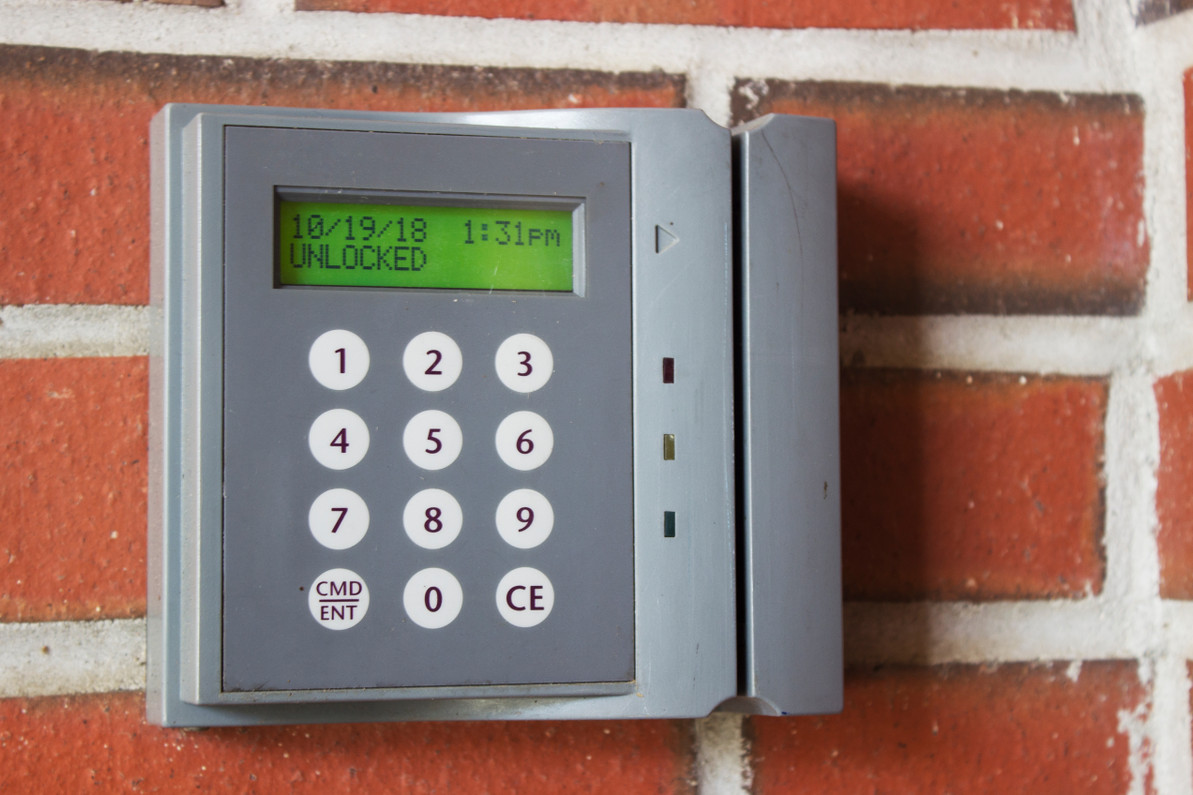
School Door Access Systems: Complete Guide to Secure School Entrances | Affinitech Store
School Door Access Systems: Complete Guide to Secure School Entrances
Modern school door access systems help K-12 schools and universities control who can enter buildings, classrooms, offices, and restricted areas. Learn how electronic locks, access control readers, mobile credentials, visitor management, and integrated security technologies can create safer educational environments.
What Are School Door Access Systems?
School door access systems are electronic security solutions that control and monitor access to school buildings, entrances, classrooms, administrative offices, laboratories, athletic facilities, and other restricted areas. Instead of relying solely on traditional mechanical keys, modern access control allows authorized students, teachers, administrators, contractors, and other personnel to use credentials such as access cards, key fobs, PINs, smartphones, or biometric technologies where appropriate.
For K-12 schools, effective door access control is an important layer of a comprehensive campus security strategy. A properly designed system can help schools maintain controlled entrances while giving authorized personnel convenient access to the spaces they need.
School door access control becomes even more powerful when integrated with school security cameras, video management systems, visitor management, emergency notification, and other campus security technologies.
School Door Access Control Definition
School door access control is a security technology that electronically manages and records access through designated doors and entrances. Authorized users receive credentials that determine which doors they can access and when they can access them.
Explore the Complete School Access Control Guide
This article is part of the Affinitech Store school security content cluster.
School Access Control Systems: Complete Guide for K-12 & Universities →
Why Do Schools Need Door Access Control?
Schools face a unique security challenge: buildings must remain accessible to students, teachers, and authorized personnel while unauthorized individuals should be prevented from entering restricted areas. Mechanical keys alone provide limited visibility into who accessed a door and when.
Electronic school door access systems provide administrators with greater control over building access. Depending on the system, administrators can issue credentials, revoke access, establish schedules, monitor door events, and quickly modify permissions when personnel or circumstances change.
Key Components of a School Door Access System
A complete access control deployment typically consists of several interconnected components. The exact configuration depends on the school's building design, security requirements, existing infrastructure, and budget.
1. Electronic Door Locks
Electronic locks provide the physical locking mechanism controlled by the access control system. Common options include electric strikes, electromagnetic locks, electrified exit devices, and integrated electronic locks.
2. Access Control Readers
Readers authenticate credentials presented by authorized users. Depending on the system, readers may support proximity cards, smart cards, mobile credentials, PINs, or other authentication methods.
3. Access Control Controllers
Controllers communicate with readers and electronic locks while applying access permissions and schedules. Enterprise controllers can manage multiple doors and connect those doors to a centralized access control platform.
4. Access Control Software
Access control software provides administrators with tools for creating users, assigning credentials, establishing schedules, monitoring events, and managing access permissions across one or multiple buildings.
5. Credentials
Credentials identify authorized users. Schools may use cards, key fobs, mobile credentials, PINs, or other technologies depending on their security requirements.
Types of School Door Access Systems
| Access Technology | Best Use | Advantages |
|---|---|---|
| Proximity Cards | Teachers and staff | Simple and familiar |
| Smart Cards | Higher-security environments | Supports advanced credentials |
| Mobile Credentials | Staff and administrators | Convenient smartphone-based access |
| PIN Keypads | Selected restricted areas | No physical credential required |
| Biometric Access | Specialized high-security areas | Strong identity verification, subject to policy and legal considerations |
Where Should Schools Use Door Access Control?
Main School Entrances
The primary entrance is usually the most important access-controlled location on a school campus. A properly designed entrance can combine controlled access, visitor management, intercoms, video surveillance, and remote door release.
Classroom Entrances
Access control can help protect classrooms and specialized instructional spaces while allowing authorized teachers and administrators to enter without traditional keys.
Administrative Offices
Administrative offices often contain sensitive records and equipment. Electronic access allows districts to restrict these areas to authorized personnel.
Gymnasiums and Athletic Facilities
Schools can establish different access schedules for gyms, athletic facilities, locker rooms, and event spaces, helping support both security and after-hours facility use.
Technology Rooms and Server Rooms
IT infrastructure and network equipment should generally receive additional physical security. Access control can restrict these rooms to authorized technology personnel.
Science Laboratories and Specialized Areas
Schools can use access control to restrict certain laboratories, equipment rooms, storage areas, and other specialized facilities.
School Door Access Control by Grade Level
| School Type | Priority Areas | Recommended Technologies |
|---|---|---|
| Elementary School | Main entrance, offices, classrooms, playground access | Card/mobile credentials, controlled entrances, visitor integration |
| Middle School | Entrances, classrooms, athletic areas, administration | Electronic locks, readers, scheduled access |
| High School | Multiple entrances, labs, athletics, offices | Enterprise access control, mobile credentials, integrated video |
| University | Residence halls, laboratories, offices, classrooms, research facilities | Enterprise access control, mobile credentials, advanced identity management |
Recommended School Door Access Control Products
The right products depend on the school's existing infrastructure and security objectives. Rather than selecting hardware based solely on price, schools should evaluate interoperability, credential technology, cybersecurity, lifecycle support, and future expansion.
Electronic Door Locks
Use electrified locks, electric strikes, electromagnetic locks, or electrified exit devices where appropriate for the door and life-safety requirements.
Explore Access Control Hardware →Access Control Readers
Choose readers supporting the credential technology used by the district, including cards, smart credentials, and mobile access.
View Access Control Readers →Mobile Credentials
Mobile credentials can provide convenient smartphone-based access for teachers, administrators, and other authorized personnel.
Explore Mobile Credential Solutions →Integrated Video Surveillance
Pair door access control with school security cameras and VMS platforms to associate access events with video activity.
Explore School Security Cameras →Integrating School Door Access with Video Surveillance
One of the most valuable capabilities of modern school security systems is the ability to integrate access control and video surveillance. When a door is opened, forced, held open, or accessed by an unauthorized credential, the corresponding event can be associated with video from nearby cameras.
This integration gives security personnel greater situational awareness. Instead of reviewing an entire recording manually, administrators can begin an investigation using a specific access event and quickly review associated video.
Example: Door Forced Open Event
- A controlled door is forced open.
- The access control system generates an alarm.
- The event is transmitted to the security management platform.
- Nearby cameras automatically provide associated video.
- Authorized security personnel investigate the event.
- Additional systems can be notified according to the school's emergency response policy.
For more information about integrating physical security technologies, see the Video Management Systems for Schools guide.
Request a School Security Assessment
Not sure which doors should be controlled or which access technology is right for your campus? Affinitech Store can help evaluate your school's entrances, existing infrastructure, access requirements, and security objectives.
Request a School Security Assessment →Related School Security Resources
Recent Posts
-
Best Security Cameras for Middle Schools | School Security Camera Guide
Best Security Cameras for Middle Schools: Complete Middle School Security Camera Guide Choosing the … -
Access Control & Visitor Management Systems for Elementary Schools | Affinitech
Access Control & Visitor Management Systems for Elementary Schools Elementary schools need security … -

Cloud vs. On-Prem VMS for Schools: Complete Guide | Affinitech
Cloud vs On-Prem VMS for Schools: Complete Guide to School Video Management Systems Should … -
School Door Access Systems: Complete Guide to Secure School Entrances | Affinitech Store
School Door Access Systems: Complete Guide to Secure School Entrances Modern school door access …